

Most Raleigh homes need working smoke detectors near sleeping areas and on each level. They also need carbon monoxide detectors if there is a gas appliance, a fireplace or an attached garage. Hardwired units should be replaced as a matched set once they pass the date printed on the back, and a licensed electrician should handle new wired locations or wiring faults.
Most smoke detector calls I get start the same way. A chirp at three in the morning won't stop, or a home inspection flagged the old units. I'm Hugo Balbuena, and I run Electric All Pro here in Raleigh. This guide covers what I tell neighbors about smoke and carbon monoxide detectors: which type you have, where they belong, when they need replacing and what a chirp usually means. It also covers which jobs you can handle yourself and when a licensed electrician makes sense. The same advice applies whether you live in Raleigh, Cary, Durham or Wake Forest.
Hardwired, battery or combination: what's in your house?
- Hardwired: powered by the house, battery backup, usually interconnected
- Battery-only: stands alone, sounds only where it is mounted
- Combination: smoke and carbon monoxide in one unit
- The label on the back tells you type and date
There are three setups I see most often around Raleigh. Hardwired detectors run on your home's electrical system and have a backup battery. In most houses they are interconnected, so when one goes off, they all go off. Battery-only detectors stand alone and only sound in the room where they are mounted. Combination units detect both smoke and carbon monoxide in one housing, which saves ceiling space and keeps things simple.
The easiest way to tell what you have is to twist the detector off its mounting plate. If a plug-in connector with wires runs up into the ceiling, it's hardwired. If there's only a battery compartment and a bare plate, it's battery-only. Also check the label for the words smoke, CO or both, so you know exactly what each unit is watching for.
Where smoke and CO detectors belong
- Near sleeping areas and outside bedrooms
- On every level, including basements
- CO coverage near gas appliances, fireplaces and attached garages
- Away from shower steam, cooking fumes and air vents
The usual layout puts smoke detectors in and near sleeping areas, in the hallway outside bedrooms, and on every level of the house, basement included. Carbon monoxide comes from things that burn fuel. That means CO detectors matter most near bedrooms and on levels with a gas furnace, gas water heater, fireplace or a door into an attached garage.
Placement also means knowing where not to put them. A smoke detector right outside a bathroom door will react to shower steam. One too close to the stove will go off every time you sear something. Dead-air corners where the wall meets the ceiling, and spots right next to ceiling fans or supply vents, can keep smoke from reaching the sensor quickly. Every manufacturer prints specific spacing guidance, and I follow it on each install.
When detectors need replacing, not just new batteries
- No date on the back, or past the replace-by date
- Yellowed or cracked housing
- Keeps chirping after a fresh battery
- Mixed brands on one interconnected system
Smoke and CO sensors wear out. Every detector has a manufacture date on the back, and most also print a replace-by date or a recommended service life. If you pull one down and can't find a date at all, or the plastic has gone yellow, that unit has been up there a long time. Replace it rather than keep feeding it batteries.
In older Raleigh and Durham homes, I often find a mix of brands. One detector got swapped here and another there over the years. Mixed brands on an interconnected system may not talk to each other, so one alarm won't trigger the others. When hardwired units reach the end of their life, I recommend replacing the whole set at once with matching detectors, so every unit shares the same date and sounds together.
What a chirp or random alarm usually means
A single chirp every minute or so is almost always a low battery. That includes the backup battery inside a hardwired detector, which people often forget is there. Many newer detectors also give a distinct end-of-life chirp when the sensor has expired. No battery will fix that; the unit has to be replaced. The manual explains which chirp pattern means what.
Random full alarms with no smoke have a few common causes. Dust or bugs can get inside the sensor, humidity can drift in from a bathroom, or a unit may simply be too old. On hardwired systems, a loose connector, a failing detector sending signals down the interconnect line, or a problem on the circuit can set off every alarm in the house. That kind of fault is where an electrician's testing earns its keep.
What you can handle yourself and when to call me
- Homeowner: batteries, testing, cleaning, battery-only units
- Electrician: new hardwired locations and interconnect wiring
- Electrician: alarms that go off together for no reason
- Electrician: detector work tied to a remodel or addition
Changing batteries, testing detectors with the button, vacuuming dust off the vents and putting up battery-only units are all reasonable homeowner jobs. If you're comfortable turning off the breaker, swapping a hardwired detector for the same model can be simple too. The catch is that connector plugs differ between brands, so a new unit from a different company may need a new pigtail or an adapter.
Call a licensed electrician for new wiring, for example when you're adding hardwired detectors in rooms that never had them or connecting a new unit to the existing ones. Circuit faults behind false alarms and detector work that's part of a renovation also belong with a licensed electrician. You can confirm any contractor's license on the NC Board of Examiners of Electrical Contractors site. Mine is NC L.32531.
What to expect when I come out
- Free estimates for new installs and replacements
- $89 diagnostic when something is wrong, typically credited toward the repair
- Final cost depends on unit count, existing wiring, attic access and ceilings
- I explain the plan before starting work
Estimates for new installations and replacements are free. If something is wrong, like chirping that won't stop or alarms going off for no reason, the diagnostic visit is a flat $89, typically credited toward the repair you approve. The cost of the work itself depends on the house. The main factors are how many detectors you need, whether wiring already runs to each location, how easy the attic is to get into, the ceiling height and material, and whether the job involves a permit. I walk through the house, test what's there and explain what I'd do before any work starts.
If a job needs a permit, I'll tell you up front. In Raleigh that goes through City of Raleigh Inspections, and Cary, Durham and Wake Forest each have their own departments. A carbon monoxide alarm that's sounding is an emergency for the fire department, not an electrician. Get everyone outside and call 911 first. Once the house is cleared, I can check the detectors and the wiring.
Frequently Asked Questions
Why does my smoke detector keep chirping after I changed the battery?
On hardwired units, make sure you replaced the backup battery in the detector that is actually chirping, then hold the test button to reset it. If it still chirps, check the date on the back. Many newer detectors give an end-of-life chirp that no battery will stop. That unit needs to be replaced, and if it's part of an interconnected set, the others are probably close behind.
Do I need a carbon monoxide detector in Raleigh if my house is all electric?
Carbon monoxide comes from burning fuel, so the main question is whether anything in or attached to your home burns fuel. A gas furnace, gas water heater, gas stove or fireplace counts. So does an attached garage where you park a car. If any of those apply, yes, put CO detectors near bedrooms and on those levels. Combination smoke and CO units make that easy.
Can I replace my hardwired smoke detectors with battery ones?
You can, but I don't recommend it. You lose house power and the interconnect, so an alarm in the basement won't wake anyone upstairs. If your home was built with hardwired detectors, a buyer's inspector will likely expect them to stay that way. It's better to replace hardwired units with new hardwired units, and the wiring is already in place.
Do different brands of hardwired smoke detectors work together?
Often they don't. Connector plugs and interconnect signals vary between manufacturers, and sometimes between product lines from the same company. A mixed set may look fine but fail to trigger the other alarms. When I replace hardwired detectors, I install one matched set so every unit shares the same age and connects the same way. Then you get the same date to watch for next time.
How much does smoke detector installation cost in Raleigh?
Estimates for new installations and replacements are free. If something is wrong, like chirping that won't stop, the diagnostic visit is a flat $89. The price depends on how many detectors you need, whether wiring already runs to each spot, attic access, ceiling type and whether a permit is involved. Swapping existing hardwired units is a very different job from running new wire in a finished home. I'll look at the house and explain the work before starting.
Do I need a permit to add smoke detectors in Raleigh?
It depends on the scope. Replacing existing detectors is usually straightforward, but new wiring, or detector work done as part of a remodel or addition, can involve City of Raleigh Inspections. Cary, Durham and Wake Forest each run their own permitting. I'll tell you before starting whether your job needs a permit, and I'll handle it if it does.
Do you install smoke detectors in Cary, Durham and Wake Forest?
Yes. I work in Raleigh, Cary, Durham and Wake Forest, and smoke and CO detector installation, replacement and troubleshooting are the same job in all four. If you're in a nearby town like Apex or Holly Springs, give me a call at (919) 670-4005 and ask. I'll tell you straight whether I can help or not.
My carbon monoxide alarm is going off. What should I do?
Get everyone, pets included, out of the house right away, and call 911 from outside. Don't open windows and linger, and don't go back in to look for the source. Wait until responders tell you it's safe. If they find no CO and the alarm turns out to be faulty or old, call me afterwards and I'll check the detectors and wiring.
Want your detectors checked in Raleigh?
Call me at (919) 670-4005, tell me what's chirping or what the inspector flagged, and we'll find a time that works for you. Licensed, insured and local in Raleigh, Wake Forest, Durham and Cary. Hugo
Hugo – Founder & Master Electrician
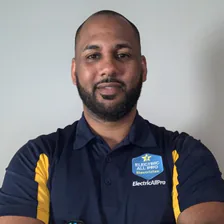
Hugo has more than 20 years in the electrical trade across Wake County and the Triangle. He built Electric All Pro on one promise: honest work, done right, explained in plain words.