Whole House Rewiring in Raleigh, NC
Complete branch-circuit replacement with modern grounded copper, grounded outlets and AFCI/GFCI protection where code requires. Permitted, inspected and planned room by room, so most families stay home while we work.
Full Whole-House Rewire $12,000–$20,000 Typical full-rewire range. Final price confirmed after a free onsite evaluation and a written room-by-room plan. 5.0 out of 5(185+ Google reviews) 185+ Google reviews Licensed & Insured NC License L.32531- Modern grounded copper wiring, planned room by room
- AFCI/GFCI protection where code requires
- Permit and city inspection included

Get a Free Rewiring Evaluation
Tell us about your home and what concerns you. We’ll review the wiring and arrange an onsite evaluation.
- Full Whole-House Rewire $12,000–$20,000 Usually 3–7 working days, plus inspection scheduling.
- Aluminum Connection Repair $2,500–$5,000 $45–$85 a connection; typically 40–60 connections, 1–2 days.
- Permit & Inspection Included Pulled by us on full, aluminum and partial rewiring jobs.
- Onsite Evaluation Free We inspect the wiring and write a room-by-room plan.


Whole House Rewiring Pricing Guidance
Rewiring pricing in Raleigh, NC depends on the scope of work at each property. Full rewires, aluminum repairs and partial rewiring are priced differently; the factors below have the biggest impact on the final cost.
-
Full Whole-House Rewire
$12,000–$20,000
- Full branch-circuit replacement with modern grounded copper
- Usually 3–7 working days, plus inspection scheduling
- Panel upgrade, data wiring and fixtures included when needed
- Permit and city inspection included
-
Aluminum Connection Repair
$2,500–$5,000
- $45–$85 per connection, using listed connectors
- Typical total for 40–60 connections in suitable 1965–1973 aluminum homes
- 1–2 working days; permit and inspection included
-
Partial Rewiring
Priced by scope
- Priced by rooms, circuits and condition
- No figure until we have seen the wiring
- Permit and inspection included
-
Onsite Evaluation
Free
- We inspect the existing wiring and explain the options
- Written room-by-room plan with scope and price
- No obligation
-
Home Size and Layout
Square footage and circuit count drive labor. Multi-story homes with finished walls take longer than single-story with attic access.
-
Access to Wiring Paths
Attics, crawlspaces, and unfinished basements reduce wall openings; slab foundations and finished ceilings add work.
-
Panel and Service Condition
A full rewire includes a panel or service upgrade when the existing one is undersized or aging, so its condition shapes the price.


Aluminum connection repair is for suitable aluminum branch wiring only. It is not an option for knob-and-tube or worn cloth-insulated wiring.
A full rewire includes the panel or service upgrade when it is needed. See our panel upgrade options.
Free Rewiring EvaluationWhat Wiring Does Your Home Have?
The common wiring types in older Triangle homes: how to spot each one, what it may mean, and the usual next step.
-
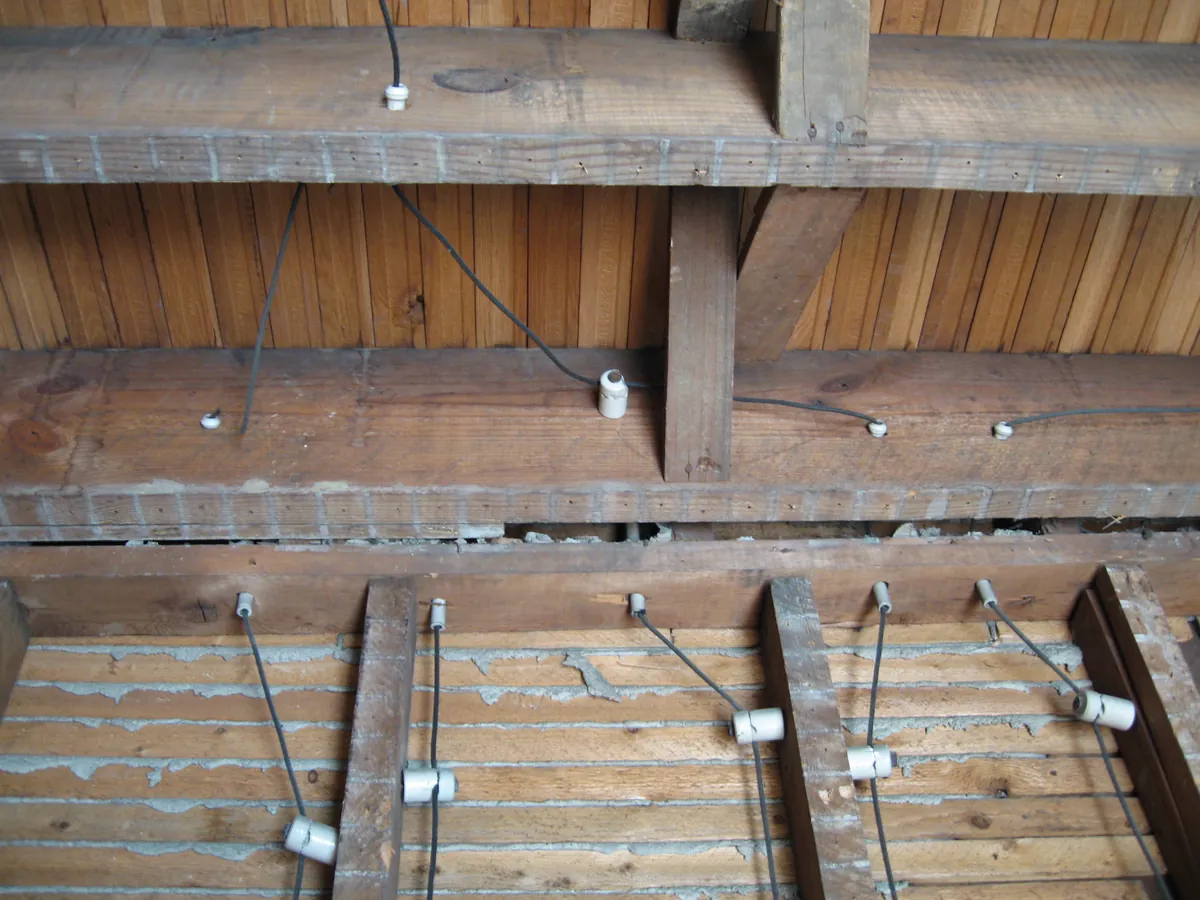
Photo: Laura Scudder, CC BY-SA 3.0, via Wikimedia Commons Knob-and-tube
- How to spot:
- Ceramic knobs and tubes carrying separate single wires, with no ground; often in homes built before about 1950.
- What it may mean:
- An older wiring system that usually needs an evaluation before new loads, insurance questions or a renovation.
- Next step:
- Onsite evaluation.
-
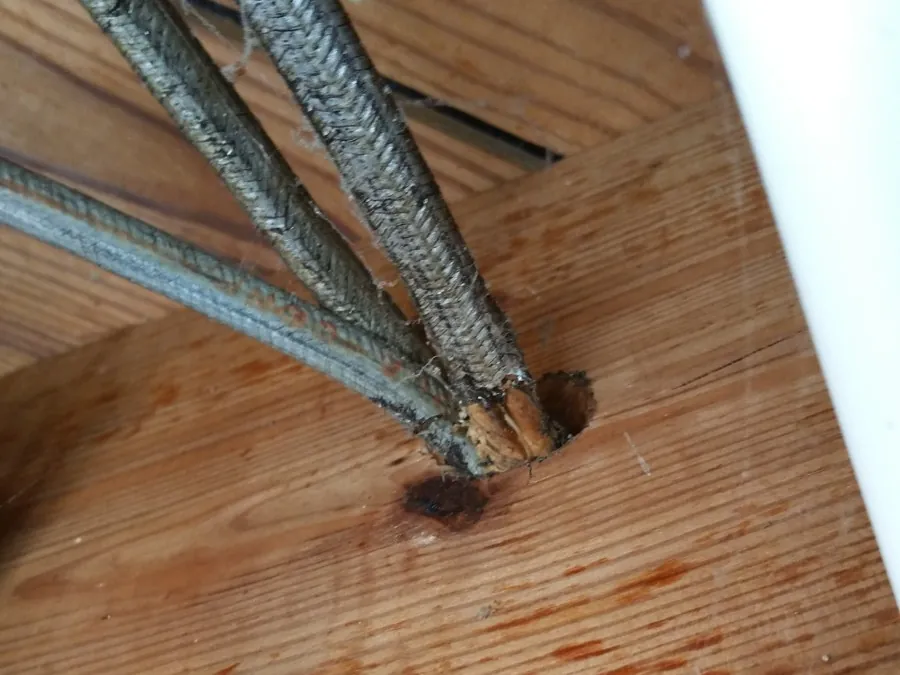
Cloth-insulated cable
- How to spot:
- A braided cloth jacket that is often brittle or frayed, and frequently no ground wire.
- What it may mean:
- Aging insulation on older branch-circuit wiring.
- Next step:
- Onsite evaluation.
-
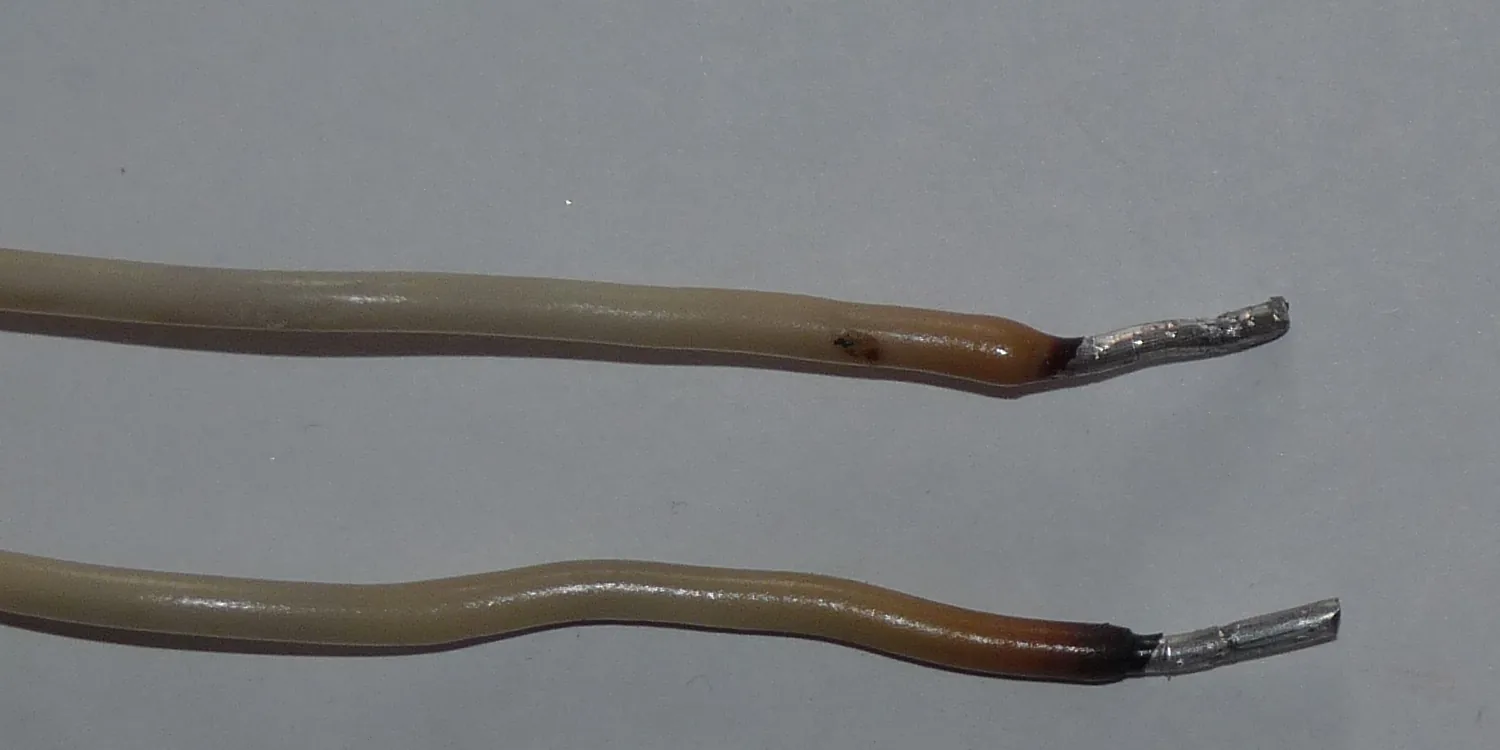
Photo: Dmitry G, CC BY-SA 3.0, via Wikimedia Commons Aluminum branch wiring
- How to spot:
- Dull silver conductors at outlets and switches, a jacket often printed AL or ALUMINUM; common in homes built about 1965–1973. The connections are the weak point.
- What it may mean:
- It may not need a full rewire: the connections may need listed repair methods.
- Next step:
- Evaluation; suitable aluminum may only need connection repair.
-
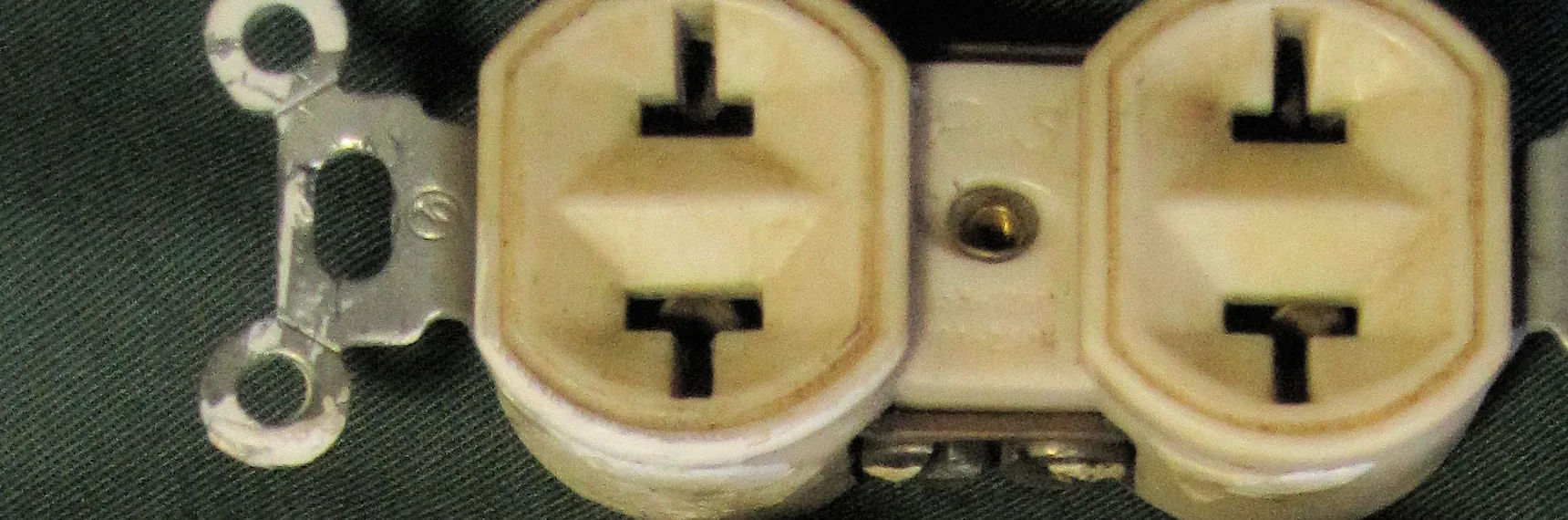
Photo: Yak99, public domain, via Wikimedia Commons Ungrounded two-prong outlets
- How to spot:
- Two-slot receptacles with no round ground opening.
- What it may mean:
- Older ungrounded circuits, with limited protection for modern devices.
- Next step:
- Onsite evaluation.
-
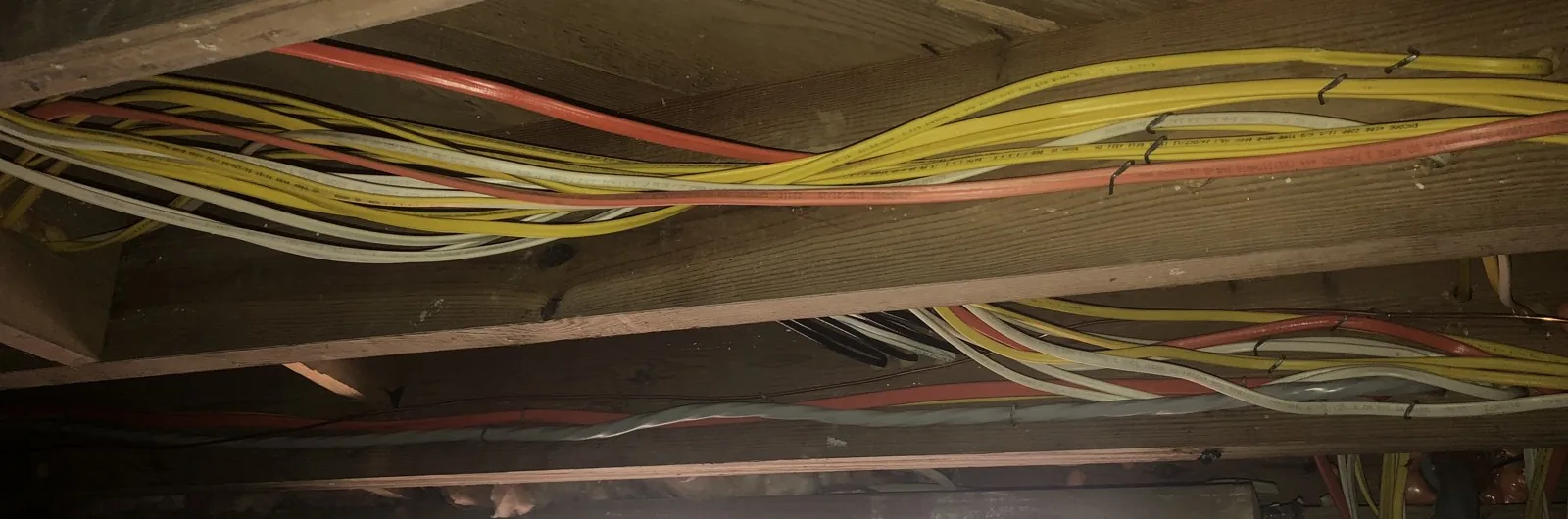
Modern grounded copper
- How to spot:
- Plastic-jacketed NM cable with a bare or green ground wire, landed in a breaker panel.
- What it may mean:
- Current-style grounded wiring.
- Next step:
- Confirm its condition during the evaluation.


Photos help, but only an onsite evaluation confirms the wiring type. Book a free evaluation.
Full Rewire, Aluminum Repair or Partial?
How the three options compare on scope, timing and best fit. The right choice for your home is confirmed at a free onsite evaluation.
| Full Whole-House Rewire | Aluminum Connection Repair | Partial Rewiring | |
|---|---|---|---|
| Typical Price | $12,000–$20,000 | $45–$85 per connection (typically $2,500–$5,000) | Priced by the scope |
| Typical Timeline | Usually 3–7 working days, plus inspection scheduling | Normally 1–2 working days | Varies by scope |
| Scope of Work | Complete branch-circuit replacement with modern copper | Aluminum connections repaired with listed connectors | Targeted rooms, areas or circuits |
| Best Fit | Older, ungrounded or worn wiring (knob-and-tube, cloth) | Suitable 1965–1973 aluminum branch wiring only | Updates to specific areas, such as a remodel |
| Permit & Inspection | Included | Included | Included |
-
Full Whole-House Rewire
$12,000–$20,000
Usually 3–7 working days, plus inspection scheduling · permit and inspection included
Older, ungrounded or worn wiring (knob-and-tube, cloth)
-
Aluminum Connection Repair
$45–$85 per connection (typically $2,500–$5,000)
Normally 1–2 working days · permit and inspection included
Suitable 1965–1973 aluminum branch wiring only
-
Partial Rewiring
Priced by the scope
Varies by scope · permit and inspection included
Updates to specific areas, such as a remodel


Panel Upgrade Included in a Full Rewire
When the evaluation shows your panel or service needs replacing, a full rewire includes it. For a panel upgrade on its own, see our electrical panel upgrade page →

Free Onsite Evaluation
We inspect your wiring, review your options and give you a written room-by-room plan. The recommendation is based on your home, not a one-size-fits-all approach.
Whole House Rewiring Overview
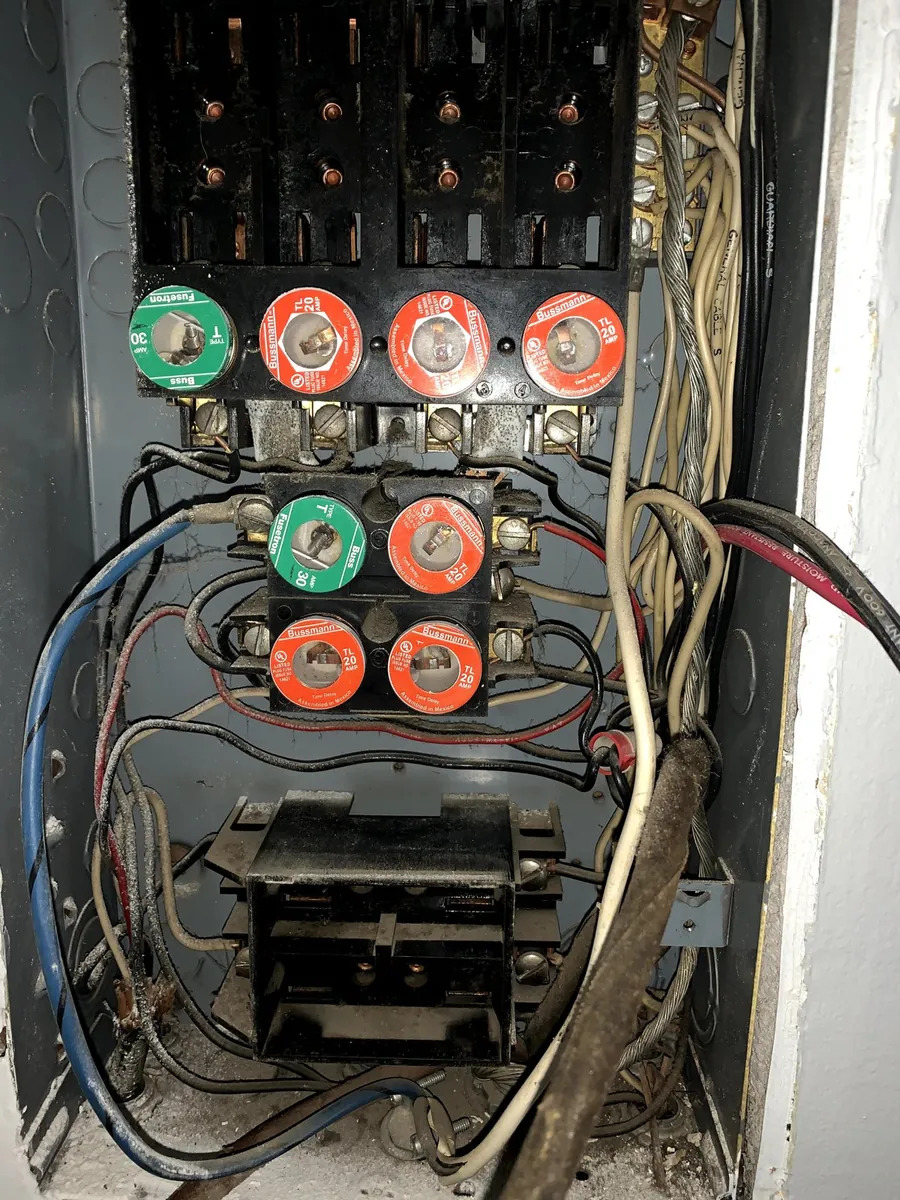
Whole-house rewiring replaces aging branch wiring — aluminum, cloth-insulated, or knob-and-tube — with modern grounded copper. We rewire room by room with small, planned wall openings, add grounded outlets and AFCI/GFCI protection where code requires, and finish with the city inspection, giving an older Raleigh home a sound electrical foundation.
-
Older Wiring Replaced
-
Grounded Circuits
-
Records for Insurance & Sale
When To Schedule Whole House Rewiring Service
Most Raleigh rewiring projects start with a symptom — or a letter from the insurance company. These are the signs your home’s wiring is due for an evaluation:
- Home was built before 1970 with original wiring
- Two-prong, ungrounded outlets throughout the house
- Aluminum branch wiring (1965–1973 homes)
- Fuses or breakers blow regularly in multiple rooms
- Lights flicker or dim when appliances run
- Insurance company requested a wiring inspection or remediation
Common Reasons Homeowners Book This Service
Aluminum and knob-and-tube remediation, insurance requirements, renovation prep, and chronic electrical problems in homes built before 1970.
What a Rewire Week Looks Like
We rewire your home in phases, room by room, so it stays livable and clean while the work goes on.


- 1
Phase 1 – Living Areas
Main living spaces first, such as the living room.
- 2
Phase 2 – Kitchen & High-Use Areas
The kitchen and the circuits near it.
- 3
Phase 3 – Bedrooms & Remaining Rooms
Bedrooms, baths and any rooms left.
-
Must-Have Circuits
Fridge, medical equipment and a home office are planned around each day.
-
Daily Cleanup
We clean up at the end of each day.
-
Rough-In Inspection
A required city inspection while the walls are open.
-
Final City Inspection
A final inspection once the work is complete.
-
Permit Pulled by Us
We file and handle the permit for you.


What Happens to Your Walls?
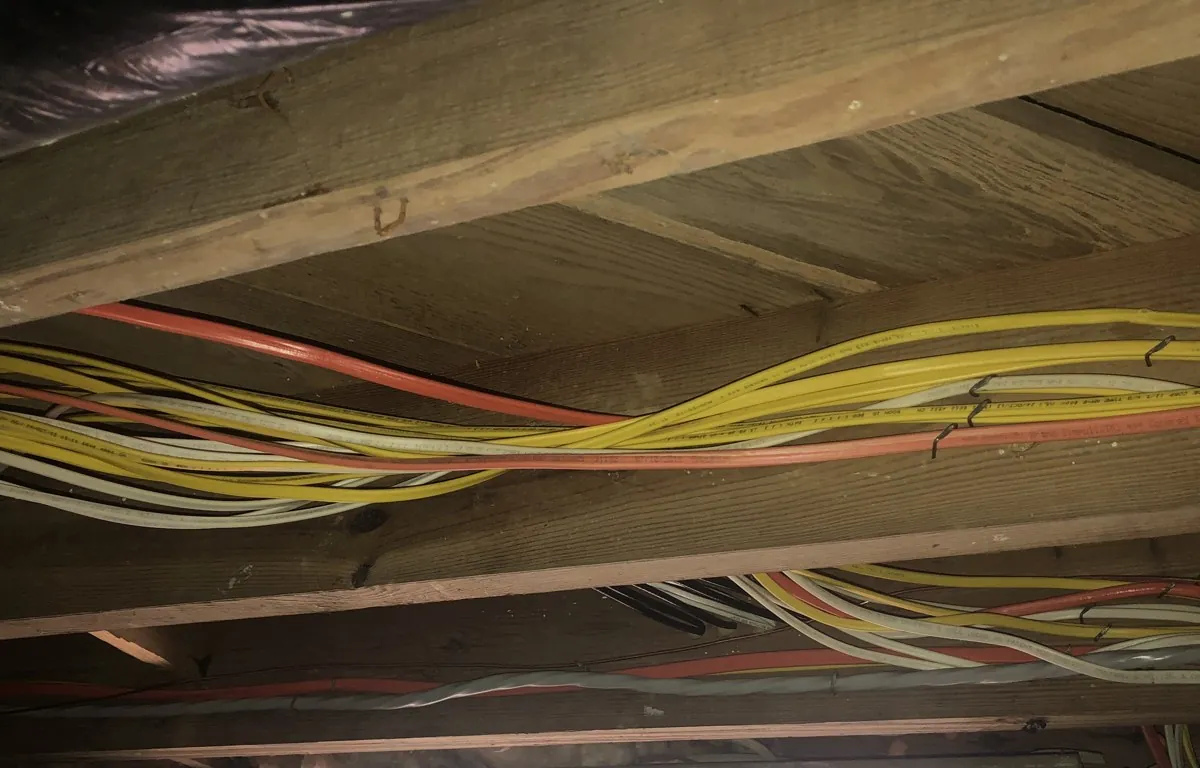
We plan the wiring path to keep wall work small. Cable goes through the attic, crawlspace and closets first, and we open only small, planned areas when needed.
- 1
Attic
Main cable runs go through the attic when possible.
- 2
Closets
Closets carry cable between floors and rooms.
- 3
Wall Access
Small, planned openings at outlets, switches and the top or bottom plates.
- 4
Crawlspace
New runs go along the crawlspace when needed.
- 5
Rough Patching
Our openings are rough-patched (included). Finish texture and paint are separate.
- Small Openings
- Strategic Routing
- Rough Patch Included
- Daily Cleanup
What’s Included / What’s Not
We believe in complete transparency. Here’s exactly what’s included in our standard whole-house rewiring service—and what falls outside the scope of work.
Included
-
Complete Branch-Circuit Replacement
All accessible branch wiring replaced with grounded copper, sized to code.
-
Outlets, Switches, and Devices
New grounded receptacles and switches throughout, GFCI where required.
-
AFCI Breaker Protection
Arc-fault protection installed on circuits where required by current NEC.
-
City Permit and Inspection
Permit pulled, phased inspections scheduled, and work verified compliant.
-
Panel or Service Upgrade
A new panel or service upgrade when the evaluation shows the existing one needs replacing, on the same permit.
-
Low-Voltage and Data Wiring
Ethernet, coax, and speaker wiring pulled alongside the new circuits while the walls are open.
-
Fixture Upgrades
New light fixtures and fans installed as part of the rewire plan.


Not Included
-
Drywall and Paint Restoration
Rough patching of our openings is included; finish drywall, texture, and paint are a separate trade.
How Whole House Rewiring Gets Completed Properly
Every rewiring project in Raleigh, NC begins with a free onsite evaluation. We map your circuits, inspect the existing wiring, and give you a written room-by-room plan before any work is scheduled.
-
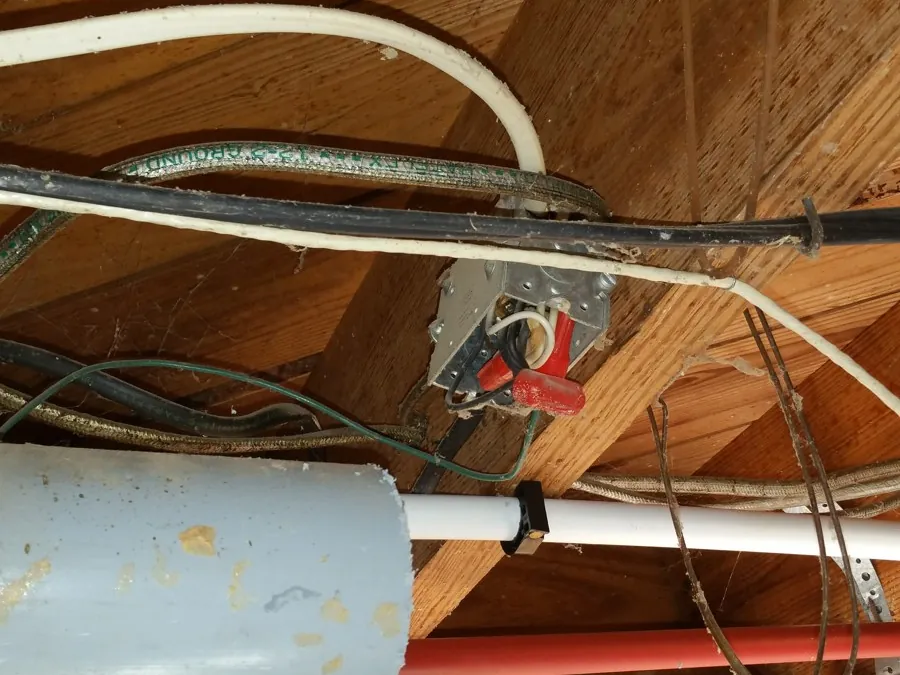
 1
Evaluation and Circuit Mapping
We inspect the existing wiring, map every circuit, and write a phased plan that keeps your home livable during the work.
-
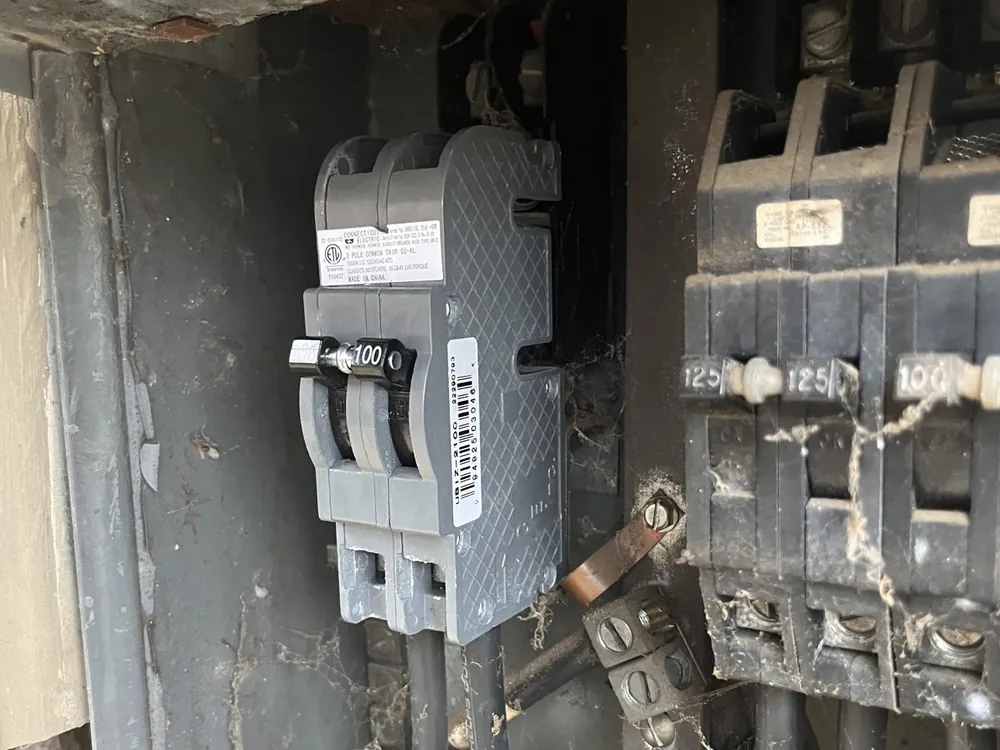
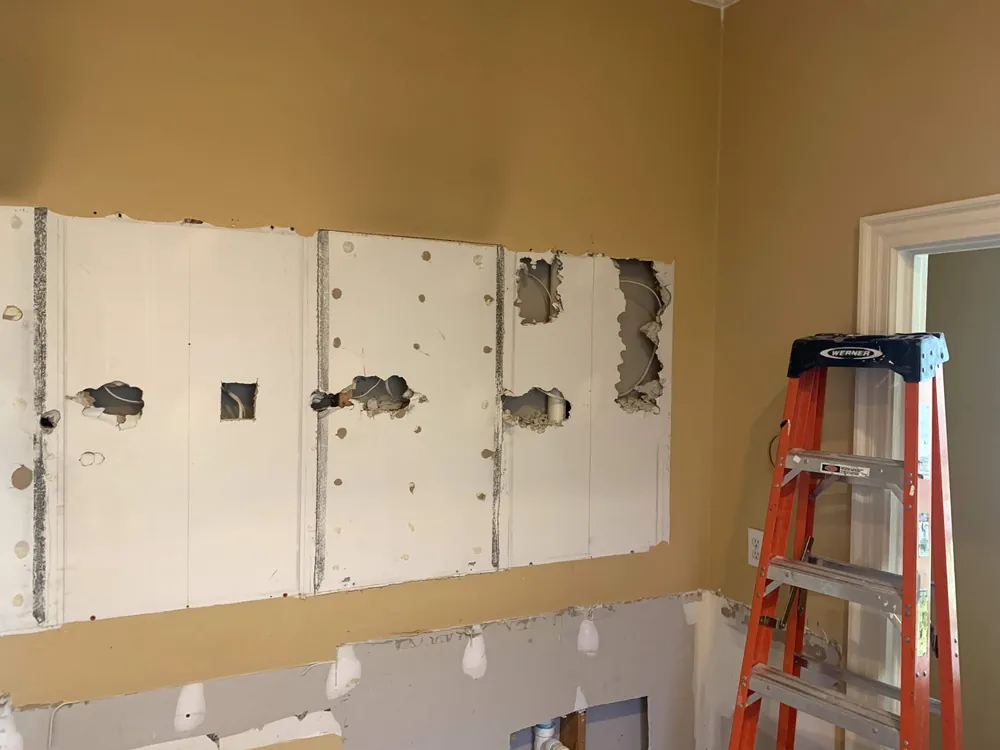 2
Phased Rewiring Work
New copper is run room by room through attics, crawlspaces, and minimal wall openings. Power generally stays on in the rooms we are not working in.
-
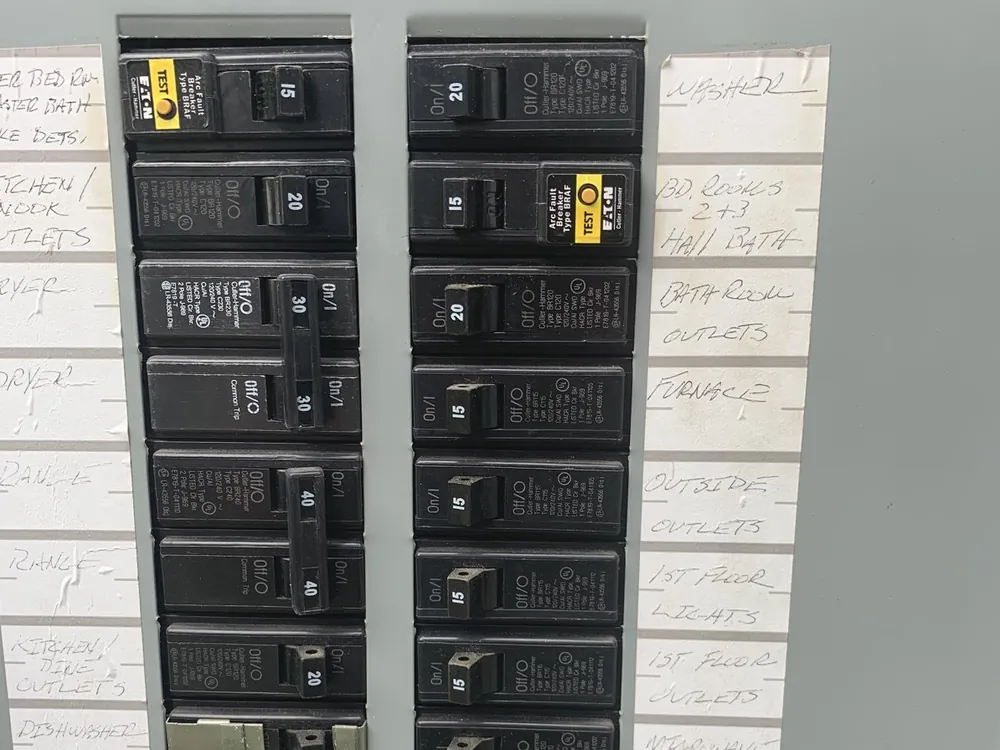 3
Inspection and Closeout
Every circuit is tested and labeled, the city inspector verifies the work, and you receive documentation for insurance and resale.
Ready for Safe, Modern Wiring?
We make whole-house rewiring phased, clean, and stress-free.Benefits of Whole House Rewiring for Modern Homes
A whole-house rewire in Raleigh, NC delivers improvements across electrical safety, everyday reliability, and insurance and resale records.
-
Aging Insulation Replaced
Brittle, deteriorated insulation on old conductors is removed — a common cause of arc faults.
-
Circuits Sized for Today
Kitchens, laundry, and home offices get dedicated circuits sized to modern loads.
-
Clean, Labeled System
Every circuit tested and labeled — you always know what controls what.
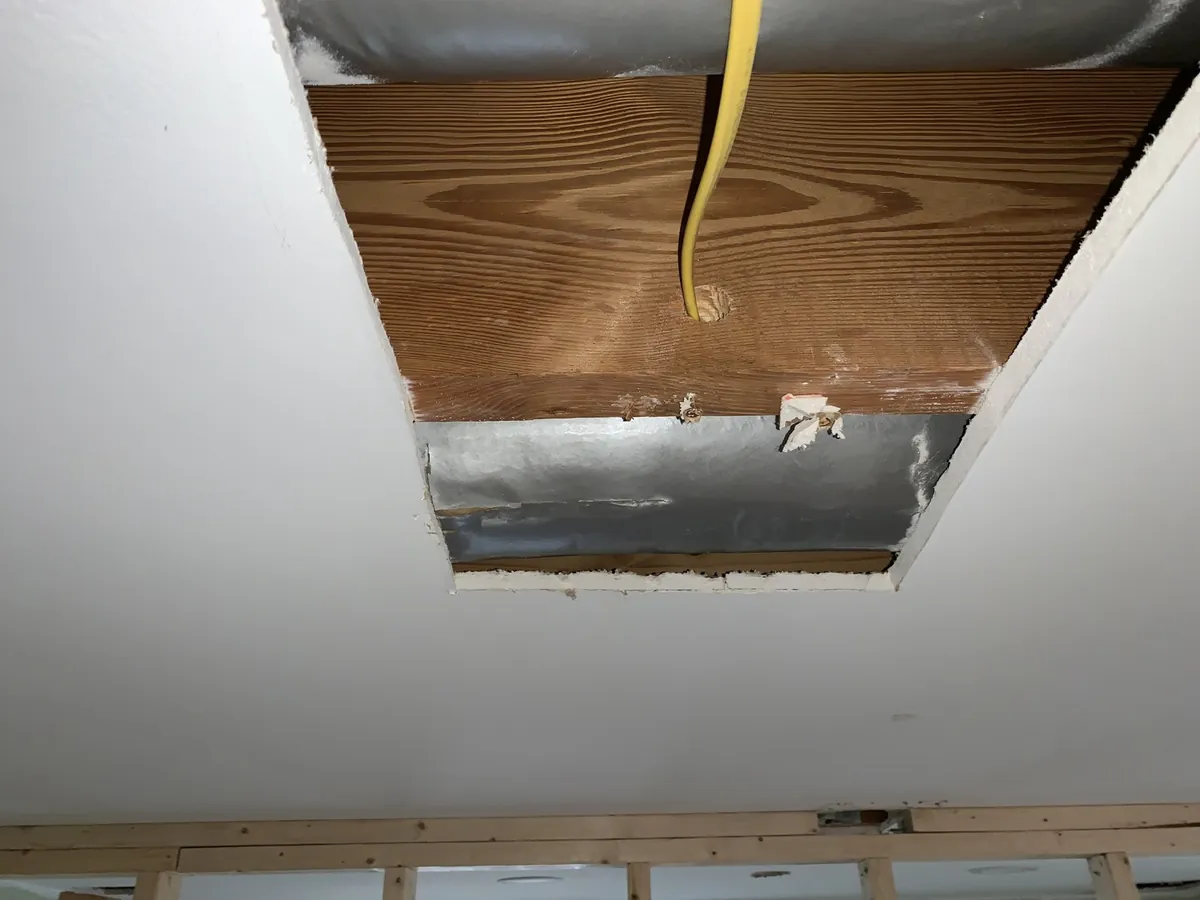
Insurance & Selling Your Home
A permitted, inspected rewire leaves the records that insurers and buyers usually ask for, so you have a clear history of the work.
For Your Insurer

- Permitted electrical work with city inspections.
- A written description of the work completed.
- Documentation you can provide if your insurer asks for it.
For a Buyer

- A clear record of the updated, code-compliant wiring.
- The permit and final inspection record.
- A labeled panel directory showing the new circuits.
-
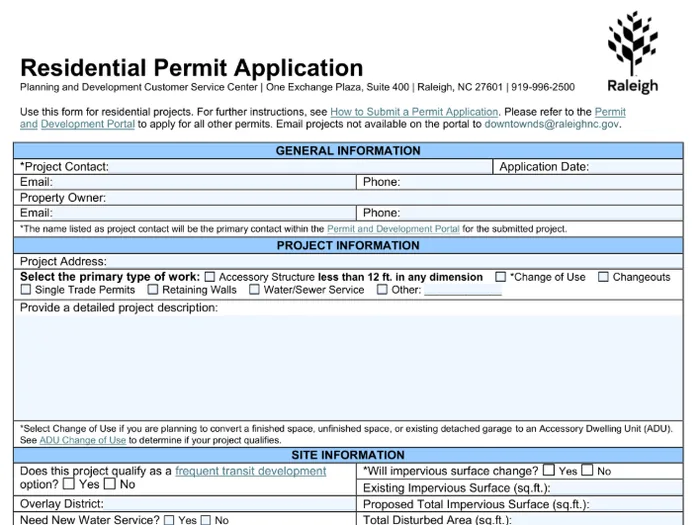 City permit
-
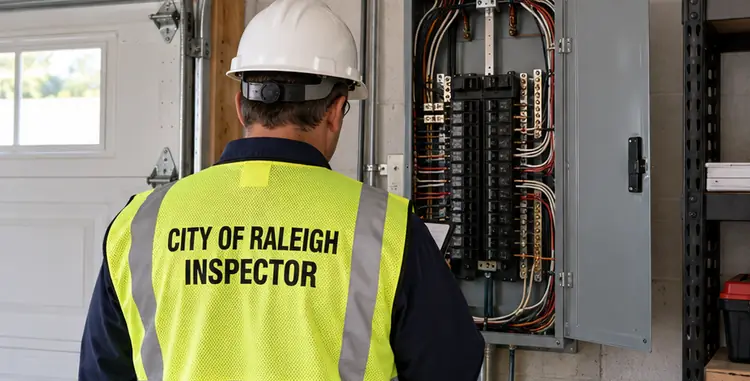 Final inspection record
-
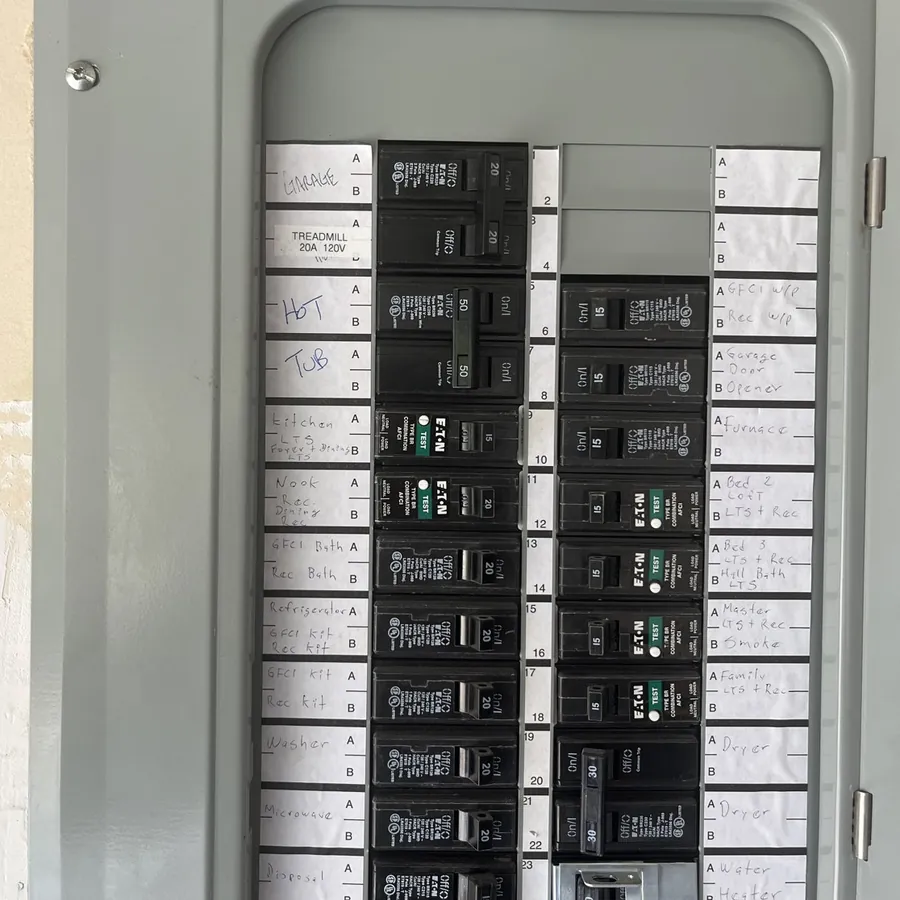 Labeled panel directory

The Paperwork You Receive
What Homeowners Say
In Recent Reviews Online
Homeowners across Raleigh and the Triangle trust our electrical services for reliable results and honest work.
“We had a great experience working with Hugo for wiring and mounting our over the range microwave. He was able to come out quickly and gave us a great price for the service. Definitely recommend!”

“Electric All Pro came out for Gas Bonding Wiring. Friendly, professional, fair price, and explained the repair. We will be reaching out to Hugo in the future for other projects.”

“⭐⭐⭐⭐⭐ I want to leave an honest review because my experience with Hugo was ultimately positive, although it wasn't without some frustration along the way. I originally called because I had two breakers that repeatedly kept tripping. On the first visit, Hugo replaced both breakers and I paid approximately $360. Unfortunately, shortly after he left, the breakers started tripping again, so the original $360 repair did not solve the actual problem. I was disappointed and concerned because I knew something else had to be wrong, and with an electrical issue I was obviously worried about safety. I contacted Hugo again and explained my concerns. To his credit, he did not walk away from the problem. He came back to the house and spent additional time trying to determine what was causing the breakers to trip, even though the cause wasn't immediately apparent. Before his next scheduled visit, I happened to discover the problem myself. I raise African Grey parrots, and one of them had managed to chew through part of a wall and severely damage several electrical wires. The amount of damage was shocking, with exposed wiring that could have caused a very serious situation. Once we knew where the problem was, Hugo came back and repaired the damaged wiring and got everything taken care of. I paid an additional $480+ for that work. I'm giving Hugo five stars because I believe it's important to judge the entire experience, not just one part of it. He was personable, professional, and most importantly, he came back and followed through until the actual problem was repaired. I appreciate that. My one disappointment was the initial $360 spent replacing two breakers that ultimately were not the cause of the problem and did not stop them from tripping. I wish the underlying circuit problem had been investigated further before replacing the breakers. That said, electrical problems can sometimes be difficult to track down—especially when the actual cause turns out to be something as unusual”

Recent Whole House Rewiring Jobs
Real jobs, photographed on the day. Every one was permitted and inspected where the code required it.
-
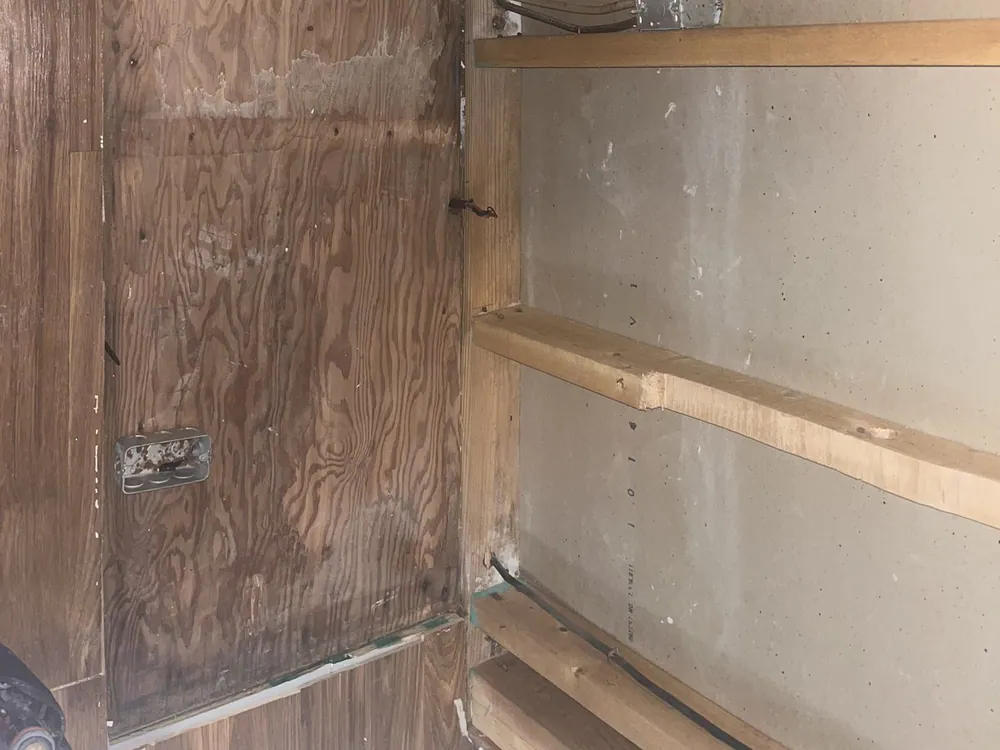
Kitchen Rewire and Siemens 200-Amp Panel
Mordecai, Raleigh, NC Kitchen Rewire + Panel -
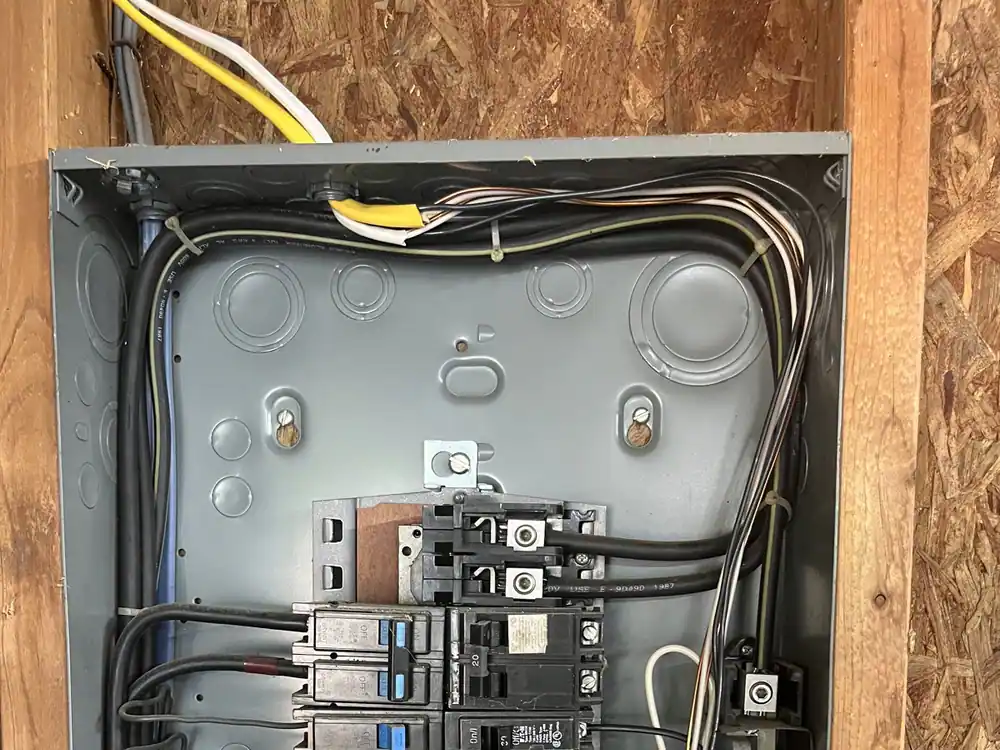
Workshop 30-Amp Circuit, Outlets and Lighting
Oakwood, Raleigh, NC New Circuits -
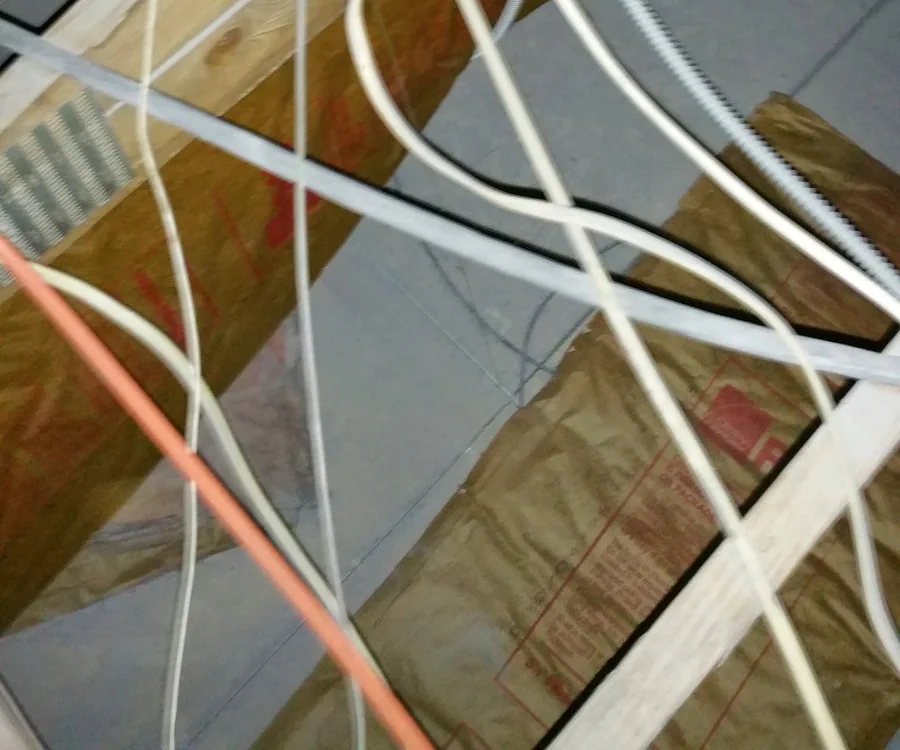
Attic Wiring Repair and Rewiring
Hayes Barton, Raleigh, NC Attic Rewiring
Optional Add-Ons for Whole House Rewiring
These add-ons are commonly recommended during whole-house rewiring work in Raleigh, NC based on conditions found during the onsite evaluation.
-
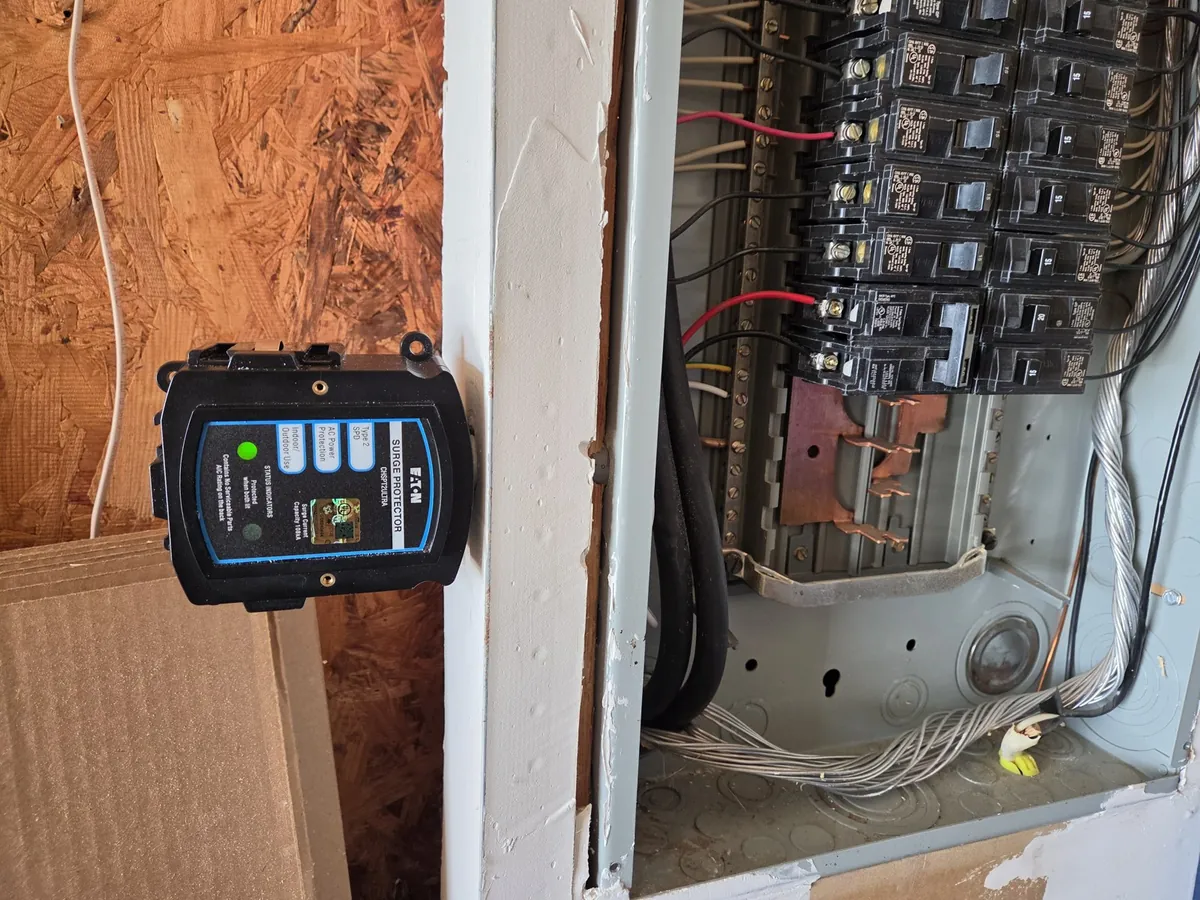 At the panel
Whole-House Surge Protection
At the panelA Type 2 surge protector at the panel helps protect the new circuits and what is plugged into them.
-
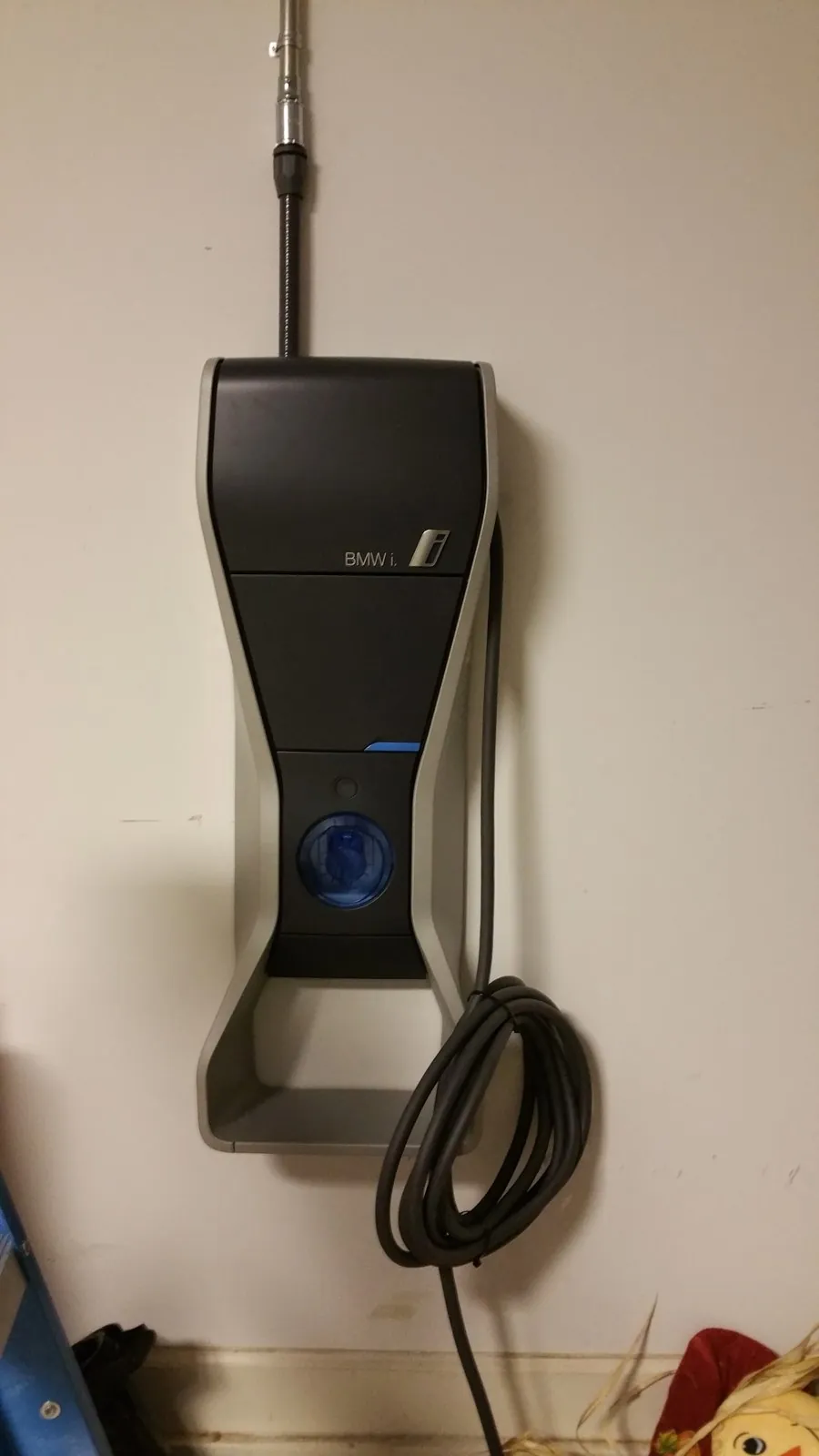 While walls are open
EV Charger Circuit
While walls are openPlan a dedicated EV charger circuit into the rewire while the walls and the panel are open.
-
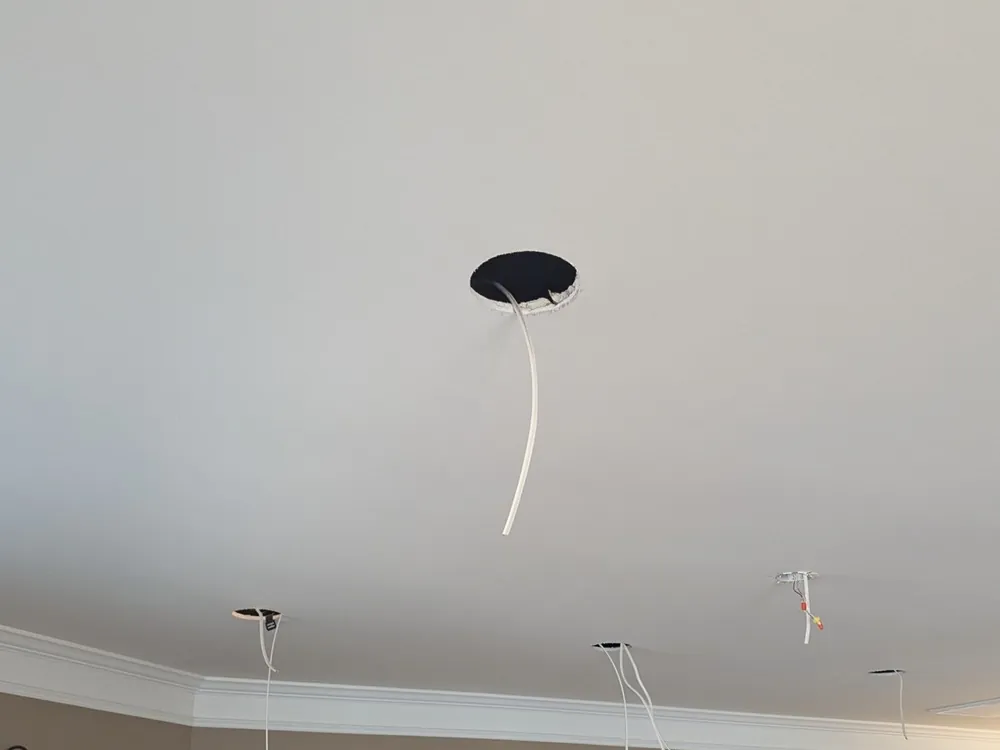 While ceilings are open
Recessed Lighting Package
While ceilings are openAdd recessed LED lighting room by room while the ceilings are accessible.
Whole House Rewiring NEC Code Requirements
Every rewiring project must comply with the National Electrical Code governing conductor sizing, arc-fault protection, grounding, and box fill.
-
NEC 240.4
1. Conductor Sizing and Protection
Every new circuit uses copper conductors matched to its breaker — 14 AWG on 15A, 12 AWG on 20A. A rewire corrects mismatched pairs, a known fire risk.
NEC Ref: 240.4. Conductors shall be protected against overcurrent in accordance with their ampacities.
-
NEC 210.12
2. Arc-Fault Protection
Most habitable rooms now require AFCI protection — breakers that detect arcing from damaged wiring and shut off before ignition.
NEC Ref: 210.12. AFCI protection required for 120V branch circuits supplying most dwelling areas.
-
NEC 210.8
3. Grounding and GFCI
All new receptacles are grounded; kitchens, baths, laundry, garages, and outdoor outlets get GFCI protection.
NEC Ref: 210.8. GFCI protection for personnel required in specified dwelling locations.
-
NEC 314.16
4. Box Fill and Splices
Every splice lives in an accessible, properly sized junction box — no buried connections, a common violation in old DIY wiring.
NEC Ref: 314.16. Boxes shall be of sufficient size to provide free space for all enclosed conductors.



Proudly Serving Raleigh, NC & The Surrounding Triangle
Electric All Pro provides professional whole-house rewiring services throughout Raleigh, NC and the surrounding Triangle.
Not sure if we service your area?
Select your city to confirm, or see all service areas.
- Raleigh, NC
- Cary, NC
- Durham, NC
- Wake Forest, NC
- Apex, NC
- Morrisville, NC
- Knightdale, NC
- Garner, NC
- Clayton, NC
- Holly Springs, NC
- Fuquay-Varina, NC
- Wendell, NC
- Zebulon, NC
- Rolesville, NC
- Youngsville, NC
- And Surrounding Areas
Ready to Rewire With Confidence?
Tell us about your home. Free onsite evaluation, no obligation.
- Free Evaluation
- Licensed & Insured
- Lifetime Labor Warranty
Common Questions
Common questions from Raleigh homeowners about whole-house rewiring service.

Speak directly with a licensed electrician in Raleigh — no call centers.


How much does whole-house rewiring cost in Raleigh, NC?
Most full rewires run $12,000–$20,000 depending on home size and wiring access. Aluminum connection repair is typically $2,500–$5,000 ($45–$85 per connection), partial rewires are priced by scope, and a full rewire includes a panel or service upgrade when one is needed. Permit and inspection are included, and the onsite evaluation is free.
Do I have to move out during a rewire?
Usually not. We work room by room in phases and clean up daily, and unaffected circuits generally stay powered. Most families stay home for the entire project.
How long does a whole-house rewire take?
Typically 3–7 working days for an average home, plus inspection scheduling. Larger homes or slab foundations with limited access take longer.
Will you damage my walls?
We route through attics, crawlspaces, and closets first, and keep wall openings small and strategic. Rough patching is included; finish drywall and paint are a separate trade.
Does my 1960s home really need rewiring?
Not automatically — an evaluation tells you. Aluminum branch wiring, cloth insulation, ungrounded outlets, and chronic breaker trips are the signals that it does.
Will rewiring satisfy my insurance company?
That decision is your insurer’s. The work is permitted, inspected, and documented, and you receive the permit and final inspection record, a description of the work, and a labeled panel directory — the records insurers and buyers usually ask for.