

A standard hardwired Level 2 EV charger installation in Raleigh typically costs $800–$1,800, not counting the charger itself, depending on panel capacity, circuit size, wiring distance, charger location, and site conditions. Level 2 charging generally adds about 10–30 miles of range per charging hour and can replenish most daily driving overnight. A Raleigh installation requires a permit and inspection.
You just drove your new EV home, plugged it into the standard outlet in the garage, and the dashboard shows a day or more until full charge. Most Raleigh homeowners hit this wall in the first week. Whether that’s actually a problem depends on how you drive — and this guide walks you through each decision in order: the charging level, the charger, the location, your panel, the cost, and the installation itself.
Level 1 vs. Level 2 vs. DC Fast Charging
Charging speed depends on the vehicle, charger output, battery condition, and the vehicle’s onboard charging limit — so think in ranges, not absolutes.
| Charging Type | Power Source | Typical Charging Speed | Best Use |
|---|---|---|---|
| Level 1 | 120V outlet | ~2–5 miles of range / hour | Short commutes, plug-in hybrids, occasional charging |
| Level 2 | 240V circuit | ~10–30 miles of range / hour | Regular home charging |
| DC Fast | High-power public equipment | ~100–200+ miles / ~30 min | Travel and rapid public charging |
Level 2 is the most practical option for many homeowners — but not automatically for everyone. Level 1 can be enough for plug-in hybrids, short commutes, or drivers who stay plugged in overnight. Level 2 suits longer commutes, larger batteries, or less predictable schedules.
Which Level 2 EV Charger Should You Buy?
Raleigh’s current guidance calls for hardwired installation, so plan on a hardwired Level 2 unit. Beyond that, these are the things worth comparing before you buy — ideally after the electrical assessment, not before.
Connector compatibility
Match the plug to your vehicle (J1772 or NACS/Tesla).
Charger amperage
Common home units run 32–48A. The circuit is sized to the charger.
Vehicle’s AC charging limit
Your car only accepts power up to its onboard limit.
Wi-Fi & scheduling
Smart chargers offer timers, energy data, and app controls.
Cord length
Reach the charge port without stretching or crossing paths.
Indoor / outdoor rating
Outdoor installs need weather-rated, impact-protected equipment.
Safety certification
Choose safety-certified (UL-listed) equipment, per federal guidance.
Manufacturer warranty
Compare warranty terms — 3 years is common on quality units.
Where Should Your EV Charger Be Installed?
The right spot balances how your vehicle parks, how far the panel is, and Raleigh’s local requirements. Walk through these before the assessment — it makes the quote faster and more accurate.
-
Charge-port side
Know which side of the vehicle the charging port is on, and how the car normally parks.
-
Close to the inlet
Raleigh recommends locating the charger close to the vehicle inlet so the cable reaches without stretching.
-
Clear of walking paths
Keep the cable out of walkways and doorways to avoid tripping hazards.
-
Protected from impact
Outdoor and garage installs should be positioned or shielded so a vehicle can’t hit the unit.
-
Indoor vs outdoor equipment
Outdoor locations require outdoor-rated equipment with weather protection.
-
Distance from the panel
Shorter wire runs cost less. Detached garages may need trenching.
-
Private parking only
Chargers belong on private parking areas — not public rights-of-way.
-
Room for a second EV
If a second EV is likely, plan the location and capacity for it now.
Can Your Electrical Panel Handle Level 2 Charging?
This isn’t a DIY math exercise. An electrician must evaluate your existing service, major appliances, panel condition, available breaker space, and calculated electrical load before selecting the charger circuit size — homes use load calculations and demand factors, not breaker totals.
The City of Raleigh specifically recommends evaluating whether the electrical system can handle the new load, and notes a typical 240-volt charging station may require a 40-amp circuit or electrical upgrades.
What the assessment covers
- Service size
- Existing calculated load
- Major loads: electric heat, water heater, range, dryer, hot tub
- Available two-pole breaker space
- Panel age and physical condition
- Charger amperage
- Load-management equipment options
- Subpanel or service-upgrade options
Evaluation matters most if:
- 100-amp service
- No available two-pole breaker space
- Older or damaged panel
- Frequent breaker trips
- Existing high-demand appliances
- Plans for a second EV
- Charging while running large household loads
Not every 100-amp home needs an upgrade, and not every 200-amp home has room. The load calculation determines it.
How Much Does EV Charger Installation Cost in Raleigh?
A standard hardwired Level 2 installation runs $800–$1,800. That price covers the electrical circuit, wiring, labor, permit, inspection, standard materials. The charger itself is not included: you buy it, and we mount, wire and test it.
What moves the price
- Charger output and circuit size
- Distance from panel to parking space
- Indoor versus outdoor routing
- Conduit or concealed wiring
- Crawlspace, attic, basement, or finished-wall access
- Panel capacity
- Subpanel or service upgrades
- Trenching or detached-garage wiring
- Permit and inspection
- Charger equipment (bought by the homeowner, not in our price)
| Installation Scope | Typical Range |
|---|---|
| Standard Level 2 installation | $800 – $1,800 |
| Complex or long-distance installation | Site-specific |
| Subpanel installation | Site-specific |
| Panel or service upgrade | $2,000 – $4,500 |
Prices vary by panel capacity, wiring distance, charger location, and permit requirements. Utility incentives may offset part of the cost.
What Happens During Installation
The City of Raleigh requires a permit before work begins and an inspection after installation. Many straightforward installations can be completed in several hours — long wire runs, exterior work, trenching, panel modifications, or service upgrades require more time.
-
Site assessment & charger selection
We confirm the vehicle, charger specifications, parking location, panel capacity, and wire path.
-
Written quote & permit preparation
Scope, equipment, circuit size, and required documents are finalized — in writing.
-
Permit approval & scheduling
We submit the required Raleigh permit information and schedule the install after approval. Review time varies.
-
Installation
A dedicated circuit, protection, wiring, mounting hardware, and the hardwired charger are installed.
-
Testing & configuration
We verify voltage, charger operation, vehicle communication, app access, and charging settings.
-
Inspection & handoff
The required City inspection is completed, then we walk you through daily use, scheduling, and safety.
Estimate Your EV Charger Installation
Adjust the details to see a realistic planning range for a hardwired Level 2 installation in Raleigh.
Short run, capacity available.
Most Raleigh installations.
Long runs, trenching, or panel work.
Frequently Asked Questions
Clear answers to the most common questions about home EV charger installation in Raleigh, NC.
How much does EV charger installation cost in Raleigh?
A standard hardwired Level 2 installation typically costs $800–$1,800, including the electrical circuit, wiring, labor, permit, inspection and standard materials. The charger itself is not included: you buy it, and we install it. Long wire runs, trenching, subpanels, or service upgrades are priced per site.
Does Raleigh require a permit for an EV charger?
Yes. The City of Raleigh requires an electrical permit before work begins and an inspection after installation. Permit review time varies — installation is scheduled once approval is received.
Can my existing electrical panel support Level 2 charging?
It depends on a professional load calculation — not on adding up breaker numbers. An electrician evaluates your service size, major appliances, panel condition, breaker space, and calculated load before selecting the circuit size.
How many amps should my home charger use?
Most home chargers run 32–48 amps; the City of Raleigh notes a typical 240V station may require a 40-amp circuit. The right size depends on your vehicle’s onboard AC limit and your panel’s available capacity.
Is a hardwired charger better than a plug-in charger?
For Raleigh installations, plan on a hardwired unit — the City’s current EV charging guidance calls for hardwired installation. Hardwired chargers also support higher amperage and outdoor-rated mounting.
Can an EV charger be installed outdoors?
Yes, with outdoor-rated equipment, weather protection, and impact protection — all part of Raleigh’s local requirements. Placement should keep the cable off walking paths and on private parking areas.
How long does installation take?
Many straightforward installations are completed in several hours. Long wire runs, exterior work, trenching, panel modifications, or service upgrades require more time.
Will I need a panel upgrade?
Only the load calculation can say. Warning signs that further evaluation matters: 100-amp service, no open two-pole breaker space, an older or damaged panel, frequent breaker trips, or plans for a second EV.
Can one charger work with different EV brands?
Generally yes. J1772 chargers work with most EVs (Tesla vehicles use an adapter), and NACS connectors are increasingly supported. We’ll match the connector to your vehicles during the assessment.
Should I buy the charger before the electrical assessment?
Ideally, no. The assessment confirms the right amperage, connector, and mounting location first — that prevents buying a unit your panel or vehicle can’t take full advantage of.
Start With a Site Assessment.
A site assessment can confirm the right charger size, panel capacity, installation location, and exact project cost before work begins.
Hugo – Founder & Master Electrician
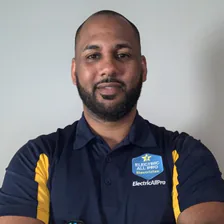
Hugo has more than 20 years in the electrical trade across Wake County and the Triangle. He built Electric All Pro on one promise: honest work, done right, explained in plain words.