

A generator inlet is an outdoor plug, wired to its own breaker in your panel, that your portable generator connects to with one cord. A listed interlock on the panel keeps the main breaker and the generator breaker from being on at the same time, so power can't flow back onto the utility lines. We install both in Raleigh, Cary, Durham and Wake Forest, with the permit, but we do not sell or install standby generators.
When a storm takes the power out, a lot of people with a portable generator end up running extension cords through a cracked window. I'm Hugo Balbuena, owner of Electric All Pro (NC license L.32531), and the setup we install across Raleigh, Cary, Durham and Wake Forest is a generator inlet with a listed panel interlock. This guide explains how it works, what you can run, how the switchover goes during an outage, how the permit works in Raleigh and what the job involves. One thing up front: we don't sell or install standby generators. We wire your home for the portable generator you have.
What does a generator inlet and interlock do?
- An inlet box outside, matched to your generator's outlet
- A dedicated generator breaker in your main panel
- A listed interlock kit made for your panel
- One generator cord instead of extension cords
- A permit and an inspection on the work
The inlet is a weatherproof box on an outside wall with a plug that matches the outlet on your generator. Behind it, a wire runs to a two-pole breaker in your main panel. During an outage you set the generator outside, run one cord from it to the inlet, and the power goes into your panel instead of into a tangle of extension cords.
The interlock is a metal plate mounted on the panel cover. It slides so that the main breaker and the generator breaker can never be on at the same time. That is the whole point. With the main breaker off, generator power can't travel back out onto the utility lines, where it could injure a lineworker, and utility power can't hit your generator when it comes back. The kit has to be listed for your panel's make and model, which is why I look at the panel before quoting.
What can a portable generator run in your house?
- Refrigerator and freezer
- Furnace fan on a gas furnace
- Well pump or sump pump
- Lights, internet router and phone chargers
- Usually off: central air, electric range, water heater and dryer
With an interlock, the generator feeds your panel and you choose which breakers are on. The limit is the generator, not the wiring. Most portable generators can carry the essentials: the refrigerator and freezer, the furnace fan on a gas furnace, a well pump or sump pump, some lights, the internet router and phone chargers. Central air, an electric range, an electric water heater and an electric dryer usually need more than a portable generator can give while it runs everything else, so those breakers stay off.
Before storm season, make a short list of the circuits you want and check that they add up to less than the running watts printed on your generator. Mark those breakers so anyone in the house can find them in the dark. Before we leave, we walk you through the switchover on your own panel, so the first time you do it isn't in the middle of an outage.
How the switchover works during an outage
- Generator outside, away from windows, doors and vents
- Main breaker off, interlock over, generator breaker on
- Your circuits on one at a time
- Reverse the steps when the power returns
Set the generator outside on level ground, well away from windows, doors and vents, and never in a garage, even with the door open. Start it and let it settle. Plug the cord into the generator, then into the inlet. At the panel, turn the main breaker off, slide the interlock and turn the generator breaker on. Then turn on the circuits on your list one at a time, so the generator takes on the load gradually.
When the power comes back, reverse the steps: generator breaker off, slide the interlock back, main breaker on, then shut the generator down and unplug it. If the whole street is dark, report the outage to your utility: Duke Energy Progress serves most of Raleigh, with Wake Electric on some of the northern edges. If only your house lost power while the neighbors have lights, that isn't a generator job. It's usually the panel, the main breaker or the service connection, and we answer that call 24/7.
Do you need a permit for a generator inlet in Raleigh?
Yes. An inlet and an interlock are new wiring into your panel, and in Raleigh anything beyond a like-for-like repair needs a permit. Inside the city limits, Raleigh issues electrical permits through its Development Services portal, and a city inspector signs the work off. Addresses outside the city line go through Wake County. We pull the permit and book the inspection either way, so the work is on record.
The other towns we serve each have their own office. In Cary it's the Town of Cary Inspections & Permits office at Town Hall on N. Academy Street. Durham handles permits through its joint City-County Building & Safety department, and Wake Forest runs its own Inspections Department at Town Hall on S. Brooks Street. Wherever you are, an inspected hookup is the one a home inspector or a buyer will want to see.
What the job involves and what affects the cost
- Panel make, model and open space
- Distance from the inlet to the panel
- The wire's route: outside wall, crawl space or attic
- Inlet size to match your generator
- Permit and inspection
- Any panel work needed first
It starts at the panel. I check the make and model, because the interlock has to be listed for it, and whether there is room for the generator breaker. Then we pick the inlet location: outside, close to where the generator will sit, with enough cord to keep the generator well away from windows and doors. The wire runs from the inlet to the panel, the breaker and the interlock go in, and we test the switchover with you before we leave.
I don't post a single price, because houses differ. What moves the number is the distance from the inlet to the panel, the route the wire takes (along the outside wall, through a crawl space or through an attic), the inlet size your generator needs and whether the panel needs work first. Estimates for new installations are free. If you're planning a panel upgrade, the inlet and interlock can be added to that job and quoted separately in the same estimate.
Standby generator or portable hookup?
A standby generator is a permanent unit on a pad. It runs on natural gas or propane and switches on by itself through an automatic transfer switch. A portable hookup is simpler: the generator lives in the garage or the shed, you roll it out when the power fails and switch over by hand, and it runs the circuits you choose for as long as you keep fuel in it.
We do not sell or install standby generators. If you have settled on one, a generator dealer is the right call. If a portable generator fits the way you live, or you already own one, the inlet and the interlock are what make it safe to use with the house, and that is the part we install.
Frequently Asked Questions
Can I plug my generator into a dryer outlet?
Please don't. A cord with a plug on both ends, pushed into a dryer outlet or any other outlet, can send power back out onto the utility lines and injure a lineworker, and it can start a fire inside your walls. The safe way to feed your panel from a portable generator is an inlet with a listed interlock, installed on a permit.
Is a generator interlock legal in Raleigh?
Yes, when the interlock kit is listed for your panel and the work is done on a permit. That's how we install it: a listed kit, a dedicated generator breaker, an inlet matched to your generator, and a Raleigh or Wake County inspection, depending on your address.
What size generator inlet do I need?
The inlet has to match the outlet on your generator, and so does the cord. Portable generators big enough to feed a house usually have a 30-amp or a 50-amp outlet. Send me a photo of your generator's outlet panel or tell me the model, and I'll match the inlet, the cord and the breaker to it.
Can a portable generator run my central air?
Usually not. A central air conditioner takes a lot of power to start, more than most portable generators can give while they run the rest of the house. Most people leave the AC breaker off and run the refrigerator, the furnace fan, a well pump, lights and the internet instead. The running watts on your generator's label decide what fits.
What about standby generators?
We do not sell or install standby generator units. We install the inlet and the interlock that let you run your home safely on a portable generator, and we take care of the panel work, the permit and the inspection. If you have settled on a standby unit, a generator dealer is the right call.
How much does a generator inlet and interlock cost?
It depends on the house: the distance from the inlet to your panel, the route the wire takes, the inlet size your generator needs and whether the panel needs work first. Estimates for new installations are free, so call and tell me your panel's brand and your generator's outlet type, and we'll set up a visit.
Do you install generator inlets in Cary, Durham and Wake Forest?
Yes. We install generator inlets and interlocks across Raleigh, Cary, Durham and Wake Forest. The work is the same in each town, and we pull the permit with whichever office covers your address, whether that is Raleigh, Wake County, Cary, Durham or Wake Forest.
Where should the generator sit while it runs?
Outside, on level ground, well away from windows, doors and vents, and never in a garage, even with the door open. Generator exhaust carries carbon monoxide, which you can't see or smell. We place the inlet so the cord reaches a safe spot, and working CO alarms inside the house are a must.
Get your panel ready for a portable generator
Call me at (919) 670-4005, tell me about your panel and your generator, and we'll plan a safe hookup with the permit. Licensed, insured and local in Raleigh, Wake Forest, Durham and Cary. Hugo
Hugo – Founder & Master Electrician
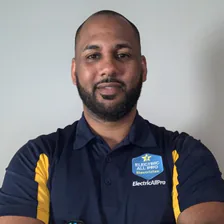
Hugo has more than 20 years in the electrical trade across Wake County and the Triangle. He built Electric All Pro on one promise: honest work, done right, explained in plain words.