
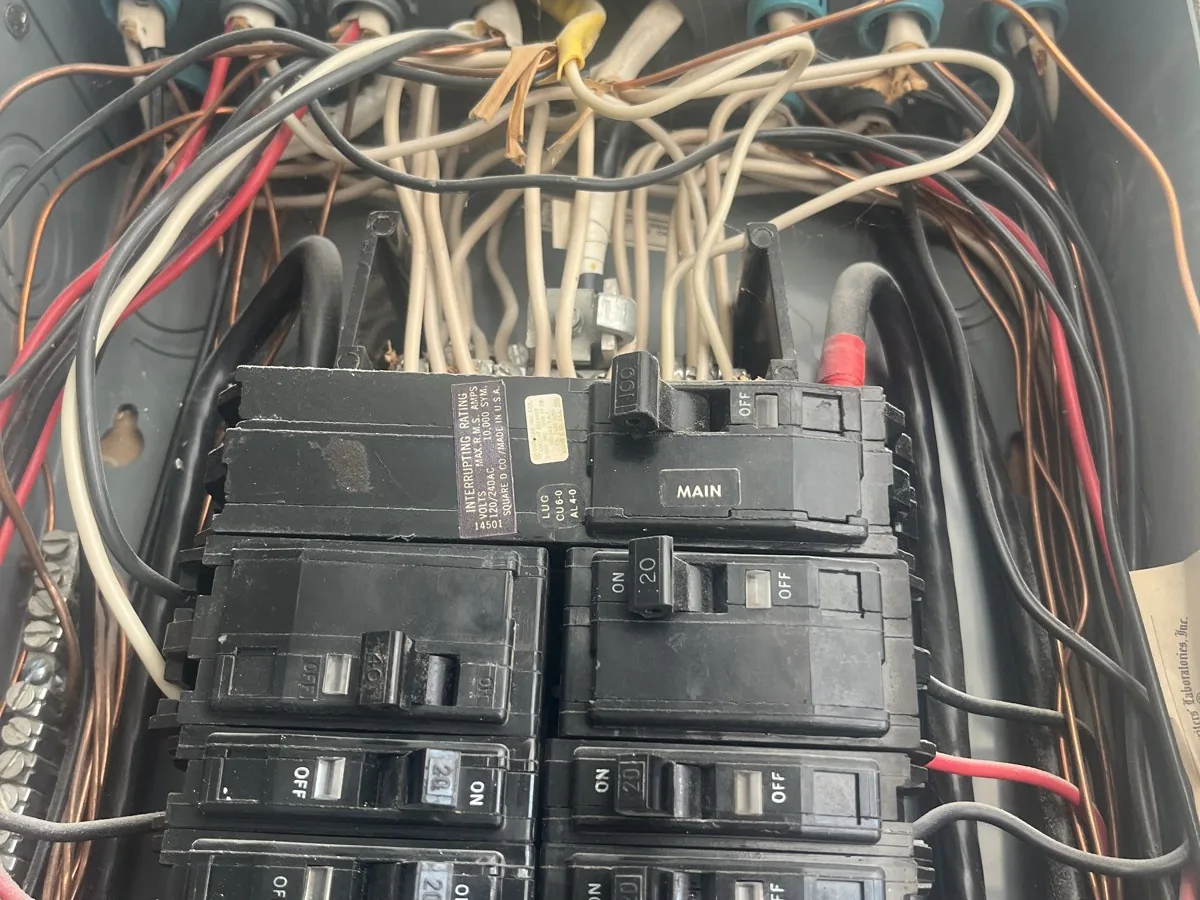
The five signs that matter: frequent breaker trips, flickering lights, burning smell or scorch marks, a warm panel cover, and age over 25 years. Burning smells and heat are emergencies — call immediately. The rest deserve an inspection soon.
Your electrical panel is the one component of your home that touches everything else — every light, outlet, and appliance runs through it. And unlike a leaking faucet, a failing panel doesn’t drip. It ticks quietly toward a bad day: a dead circuit during a work call, a fridge of spoiled groceries, or in the worst case, an arc fault behind a wall. In Raleigh’s housing stock — where thousands of homes in neighborhoods like North Hills, Oakwood, and Wakefield still run on panels installed decades ago — knowing the warning signs isn’t paranoia. It’s maintenance.
This guide walks through the five signs we see most often on Raleigh service calls, how urgent each one actually is, what happens if you wait, and what a professional inspection covers — so you can act on facts instead of fear.
Match Your Symptom to the Right Response
Not every warning sign is an emergency. Use this triage to know whether to call now, schedule soon, or simply keep watching.
Turn off the main breaker first if safe:
Burning smell from the panel
Scorch marks or discoloration
Panel is hot to the touch
Sparking or arcing sounds
Book an inspection this month:
Breaker trips more than once a month
Panel is over 25 years old
Lights flicker when appliances turn on
Panel feels warm to the touch
Keep an eye on it:
Single breaker trip after overloading a circuit
Occasional flicker during storms
Why Your Electrical Panel Fails Over Time
Your panel is the central hub distributing power to every circuit in your home. It was designed for a specific load — and that load has likely changed since it was installed.
Demand outgrew the panel
Homes built before 2000 typically have 100–150A panels. Central air, EV chargers, home offices, and smart appliances often demand 200A or more.
Heat is the silent killer
Every loose connection generates heat. Over years it degrades insulation, weakens breakers, and creates conditions for arcing — the leading cause of residential electrical fires.
Components wear out
Connections loosen, busbars corrode, breaker mechanisms fatigue through thousands of thermal cycles. Age alone raises the risk every year.
The 5 Warning Signs You Cannot Ignore
A failing panel sends signals before it fails. These five mean it’s time for professional attention.
1. Frequent breaker trips
A breaker that trips once after you plug in too many devices is doing its job. One that trips repeatedly on the same circuit — even under normal load — is failing.
2. Flickering or dimming lights
Lights that dim when the HVAC or microwave kicks on point to loose busbar connections or an undersized panel not distributing power evenly.
3. Burning smell or discoloration
The most serious sign. A burning smell means insulation or wiring is overheating; scorch marks confirm thermal damage. Do not open the panel — call immediately.
4. Warm panel cover
A panel should be cool to the touch. Warmth means excessive resistance inside — the NFPA lists electrical distribution equipment as a leading cause of home structure fires.
5. Panel age over 25 years
Panels and breakers have a service life. Past 25 years, internal components have endured thousands of thermal cycles — the risk of failure climbs even if nothing seems wrong.
“A breaker that trips once is doing its job. A breaker that trips repeatedly on the same circuit — even under normal load — is failing.”
What Happens If You Ignore a Failing Panel
Ignoring the warnings doesn’t make the problem go away — a struggling panel keeps degrading, and the consequences escalate quickly.
Electrical fire
Arcing faults reach over 10,000°F — hot enough to ignite framing, insulation, and drywall. Many panel fires start inside the wall where you can’t see them until smoke appears.
Damaged appliances & electronics
An unstable panel delivers inconsistent voltage. Refrigerators, computers, and HVAC systems are sensitive to fluctuations — inconsistent power shortens their lifespan.
Insurance & resale problems
Recalled brands (Federal Pacific, Zinsco, Pushmatic) can void fire coverage. Outdated panels surface on pre-sale inspections — we’ve seen them stop Raleigh closings more than once.
Handle It Yourself, or Call an Electrician?
Handle It Yourself If
- Single tripped breaker — flip it back on
- GFCI outlet needs a reset
- One dead outlet on a single circuit
Call an Electrician If
- Burning smell near the panel
- Multiple rooms lose power at once
- Panel is warm to the touch
- Breaker will not stay reset
What a Professional Panel Inspection Covers
A panel inspection isn’t a glance at the breaker box. In 30–45 minutes, a licensed electrician documents the panel’s real condition — and you get the findings in writing, whether or not any work follows.
The checklist we run
- Thermal scan for hot spots and loose connections
- Breaker brand check (FPE, Zinsco, Pushmatic flags)
- Busbar corrosion and moisture intrusion
- Main breaker and service rating vs. actual load
- Grounding and bonding condition
- Double-tapped or oversized breakers
- Panel age, labeling, and code compliance
- Meter base and service entrance condition
Can the Panel Be Repaired, or Does It Need Replacing?
Not every warning sign ends in a $4,000 project. A single worn breaker or a loose lug is a repair. Widespread heat damage, a recalled brand, or a panel that can’t carry your home’s modern load is a replacement. Here’s how the costs shake out in Raleigh:
| Service | Typical Range |
|---|---|
| Breaker replacement (per breaker) | $180 – $300 |
| Connection repair / lug tightening visit | $180 – $400 |
| 200A panel replacement (like-for-like) | $2,000 – $4,500 |
| Upgrade with meter base / service work | Site-specific |
Ranges reflect typical Raleigh-area jobs; recalled-brand replacements and heavily corroded panels price at assessment. One rule never changes: a panel with heat damage or a recalled brand should be replaced, not patched.
Frequently Asked Questions
Clear answers to the most common questions about aging and failing electrical panels.
How do I know if my electrical panel is dangerous?
A dangerous panel typically shows scorch marks, emits a burning smell, feels warm to the touch, or makes sparking sounds. If you notice any of these, turn off the main breaker (if safe) and call a licensed electrician immediately. Do not open or inspect the panel yourself.
How long does an electrical panel last?
Most panels have a service life of 25–40 years. Past 25 years, breaker mechanisms and connections have endured thousands of thermal cycles — an inspection every 1–2 years is smart even if nothing seems wrong.
What panel brands are considered unsafe?
Federal Pacific (FPE), Zinsco, and Pushmatic panels have documented failure rates and are flagged by inspectors and insurers. If your home has one, plan a replacement — some insurers won’t cover electrical fire damage from these brands.
Do flickering lights always mean a bad panel?
No. A single fixture flickering is usually the fixture or bulb. Whole-room or whole-house dimming when large appliances start — that pattern points to the panel or service connection and deserves an inspection.
How much does a new electrical panel cost in Raleigh?
A standard 200A panel upgrade in Raleigh typically runs $2,000–$4,500 depending on your home’s age, wiring condition, and meter base requirements. Every job includes the permit and inspection.
Can I replace my electrical panel myself?
No. Panel work means handling service conductors that stay energized even with the main off, and NC requires the work to be permitted, inspected, and performed by or under a licensed electrician.
Will insurance cover damage from an old panel?
Often, yes — but insurers investigate. Damage traced to a recalled panel brand or unpermitted electrical work is commonly denied. A documented, permitted upgrade protects both your home and your coverage.
Can a panel be repaired instead of replaced?
Sometimes. A single worn breaker or loose connection is a repair ($180–$400 range). But heat damage, corrosion across the busbar, or a recalled brand means replacement — patching those only delays the same failure.
Does a new panel add value when selling a Raleigh home?
It removes one of the most common inspection red flags, keeps insurance underwriting smooth, and signals a maintained home. Buyers’ inspectors flag old and recalled panels routinely — a documented, permitted upgrade takes that negotiation off the table.
Don’t Wait Until It’s an Emergency.
A panel inspection confirms whether your panel is safe, needs repairs, or is due for replacement — with a clear written quote before any work begins.
Hugo – Founder & Master Electrician

Hugo has over 15 years in the electrical trade across Wake County and the Triangle. He built Electric All Pro on one promise: honest work, done right, explained in plain words.